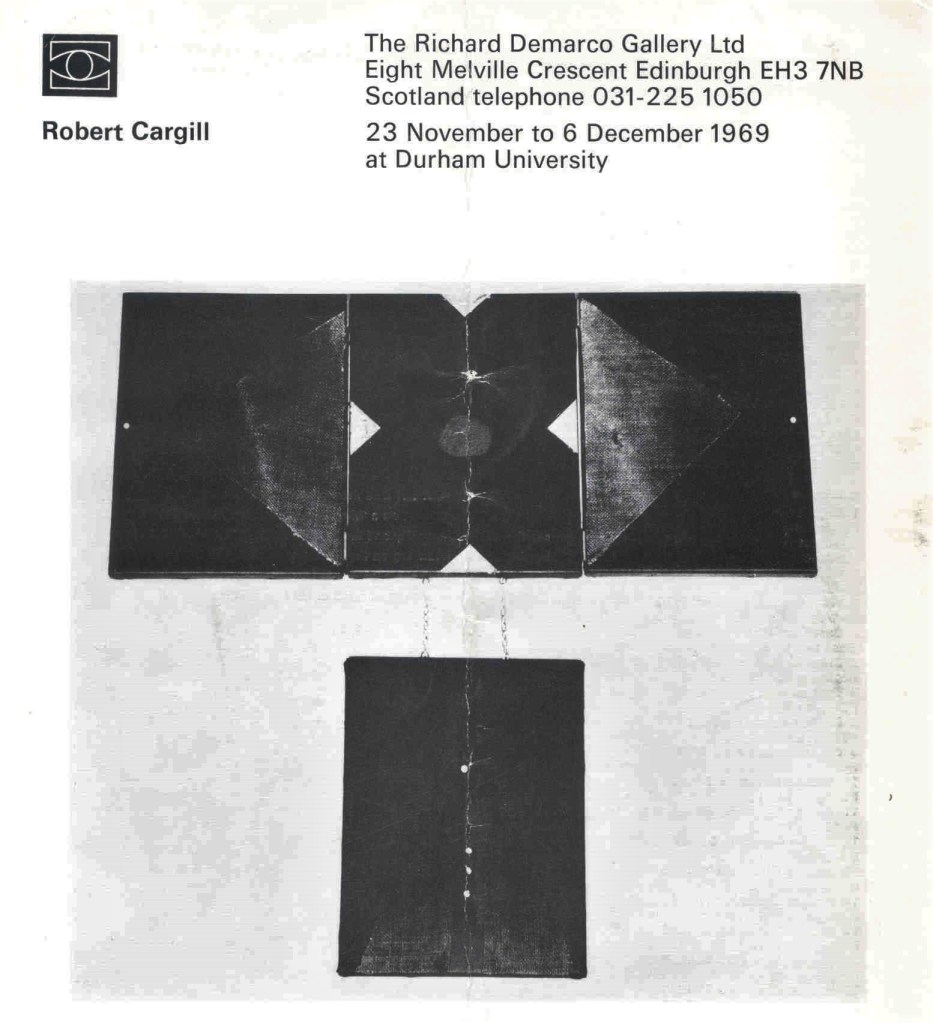
In 1969, Cargill exhibited in the New Tendencies in Scottish Art exhibition at the Demarco Gallery in Edinburgh and had a solo exhibition at the Aberdeen Arts Centre which then transferred on to Durham University. This is when what he termed the Environment series of paintings were first exhibited and it was this work which contributed to him winning the Scottish Arts Council Award in 1969.
A year later, the artist moved to Bloomfield House on the outskirts of the town. Surrounded by woodland, this environment was different to the area close to the harbour where he had lived previously, but provided him with a spacious studio in which to work. The decade ahead was a busy one. In London, he took part in the group exhibition ‘Envelopes’ at JPL Fine Arts on Grafton Street, and in ‘200 Years of Scottish Art’ at the Marjorie Parr Gallery on the Kings Road, Chelsea. There were successful solo exhibitions at the Oxford Gallery and in Stirling, Cumbria, and Fife. In 1973, the University of Edinburgh invited him to exhibit at the Talbot Rice Arts Centre, where fifty four works by the artist went on display, and in 1975, he took part in Richard Demarco’s Six Scottish Coastal Artists exhibition shown at the Saltire Society in Edinburgh. He also received a Scottish Arts Council bursary for a study visit to Amsterdam.
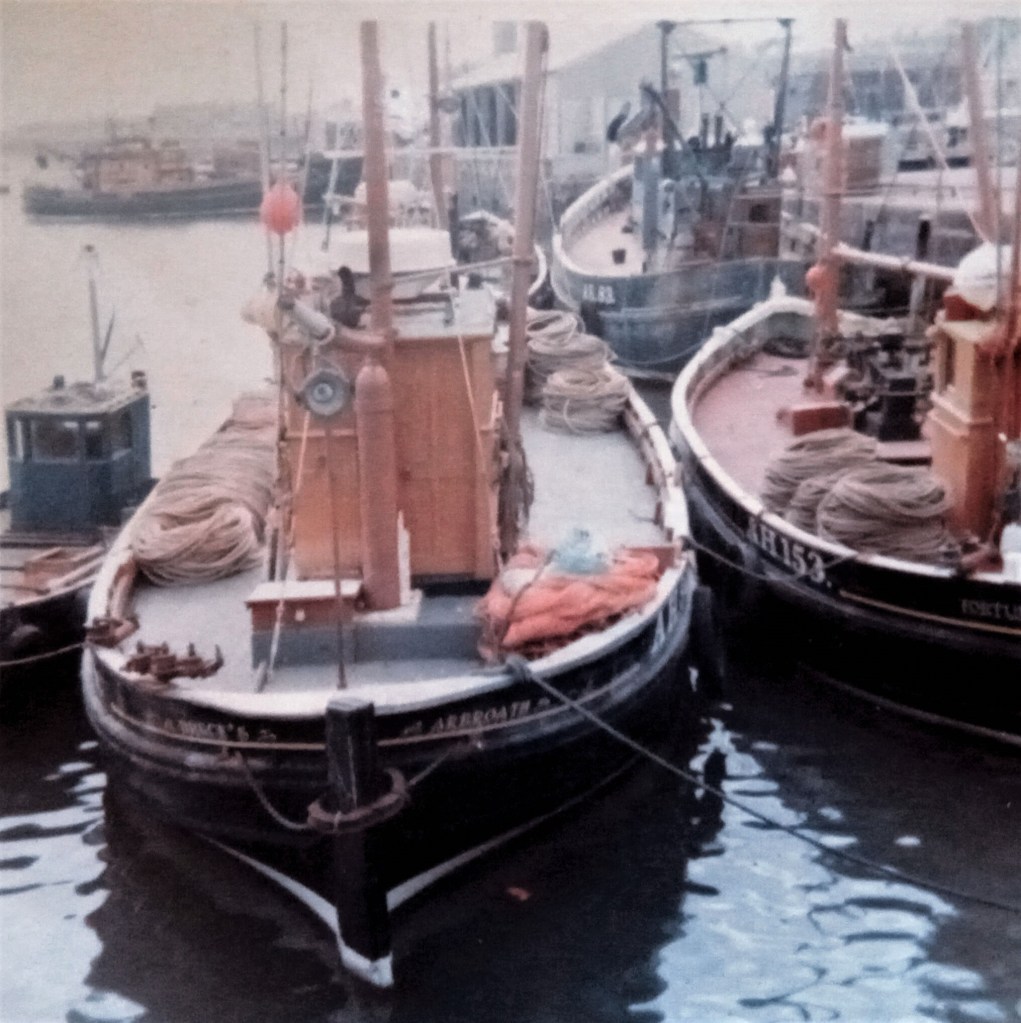
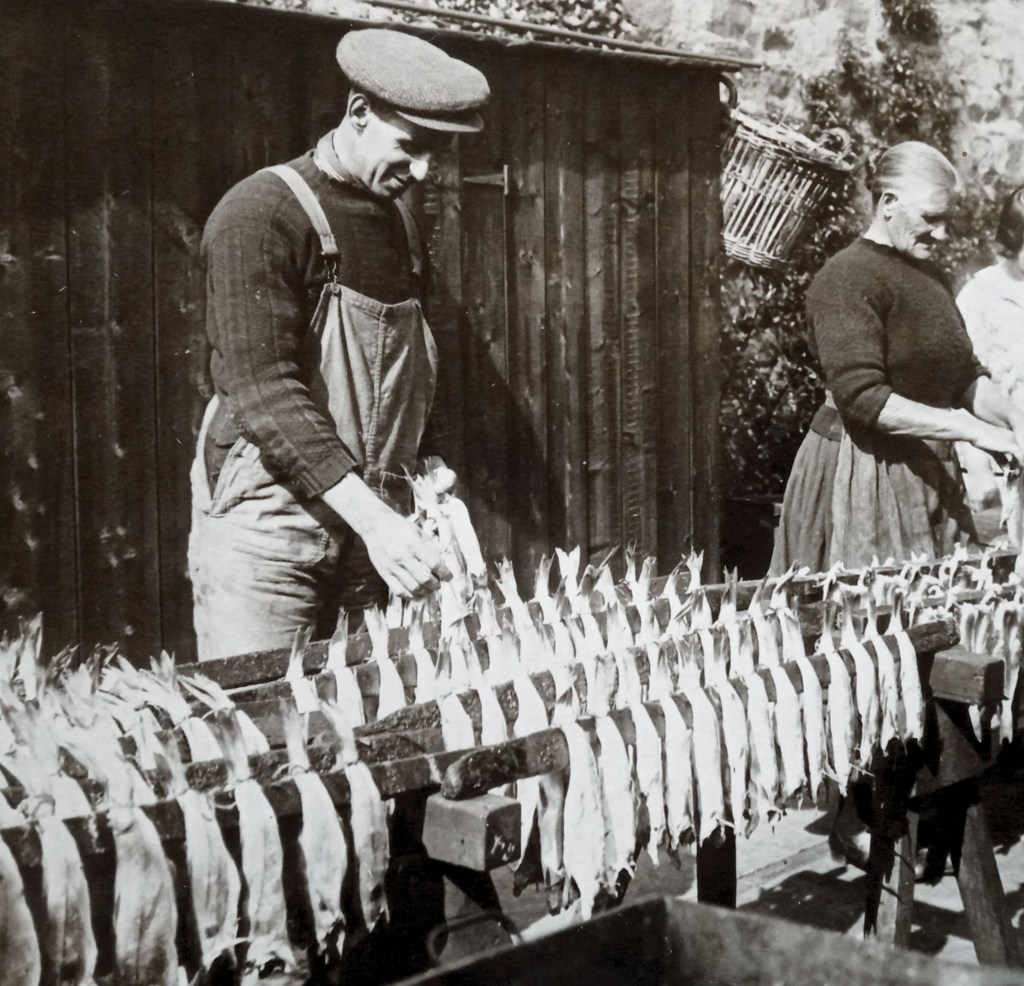
‘In 1968, the first of the environmental paintings evolved. Having been brought up in Arbroath, the coastal landscape to the north of the town had a great influence on me. It is a rugged, broken landscape where surface, texture, mass , the elements, and infinitesimal space bombard the senses. Huge rocks pinnacle skyward, oval holes tunnel the ground or display their form against the sea or sky. The burned hessian that I worked onto those canvases offered everything that I wanted with the varying black surfaces. I had had a lifelong acquaintance with the material as it lay discarded in the yard, my father having used it to smoke fish. ‘
From statement by the artist, 1979.
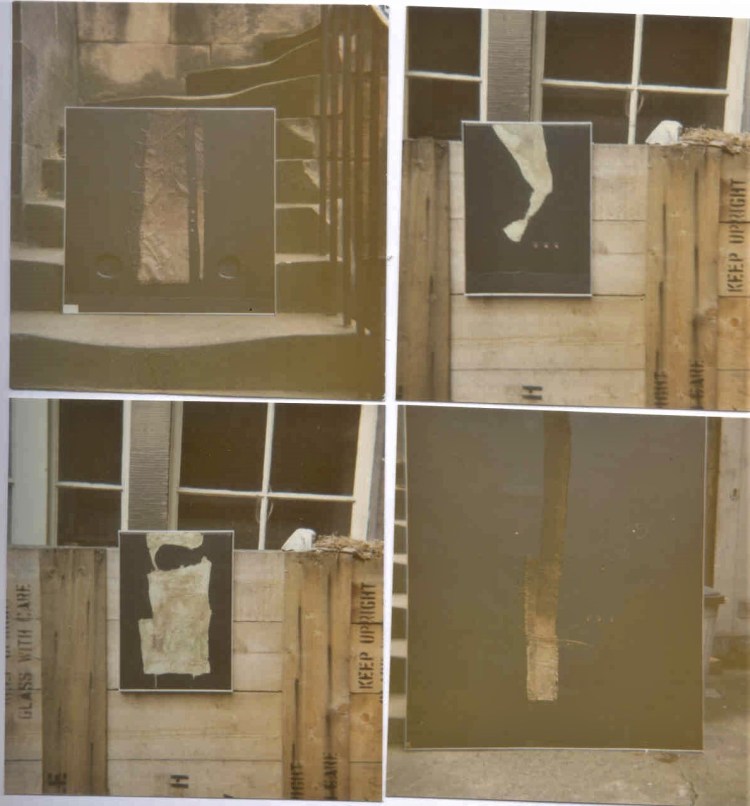
‘A native of Arbroath, Robert Cargill confesses that he has been much influenced by the town and its surroundings: he has grown up with sea and cliff, rock and beach, fish and fishing. It is with all this that his series of paintings to do with the environment deal.’
A Hewitt, interview at Aberdeen Arts Centre, 1969.
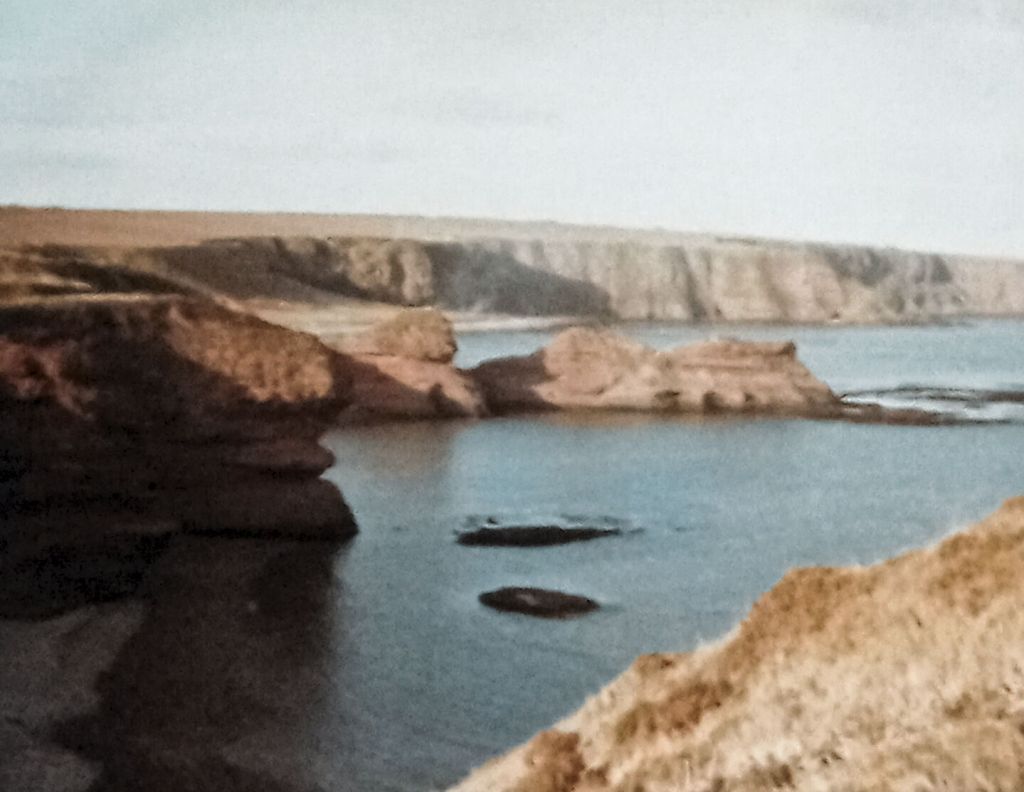
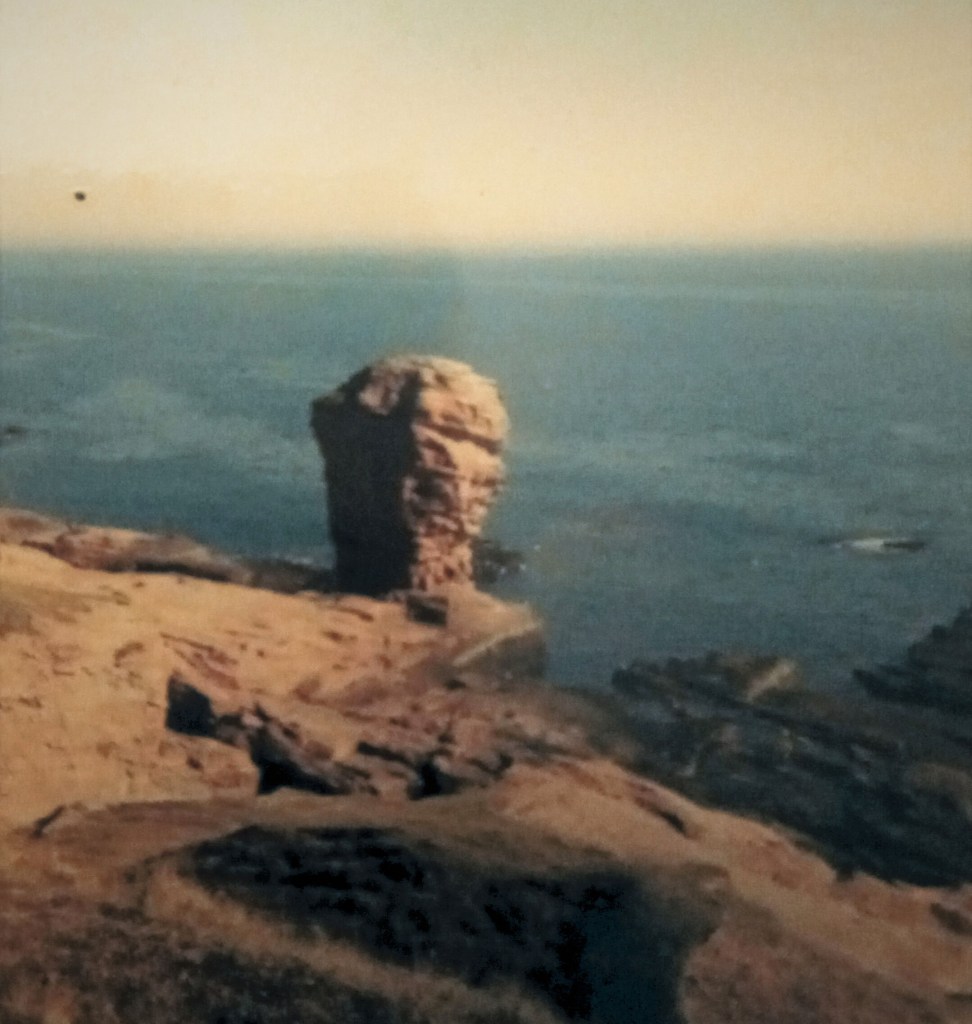
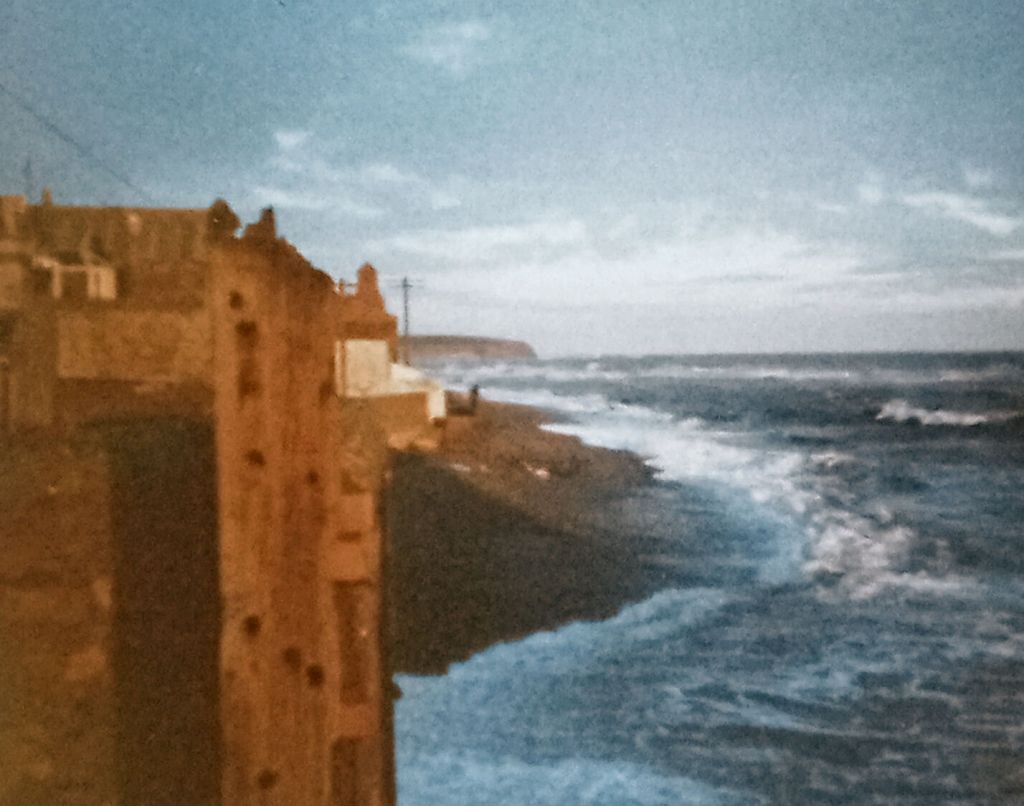
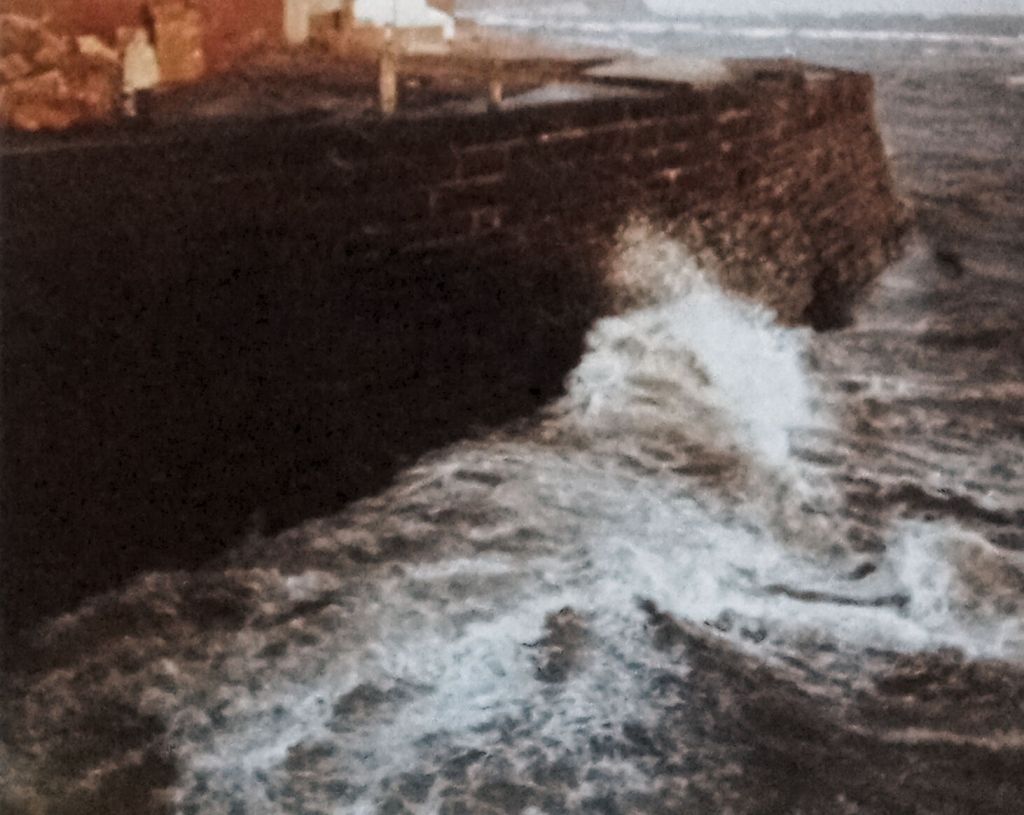
‘My environment collage paintings are an involvement with nature in my native landscape. The land, the sea and the air and sometimes the element of time. We live on a thing, in a space, with many other things. I see the colours of the sky and the things that fly in it. I watch the water lapping and pounding on the rocks, the corrosion of the coast and the things cast up by the sea anemone in its dark pool….’
Artist’s statement for the exhibition at Durham University with Richard Demarco Gallery, 1969.
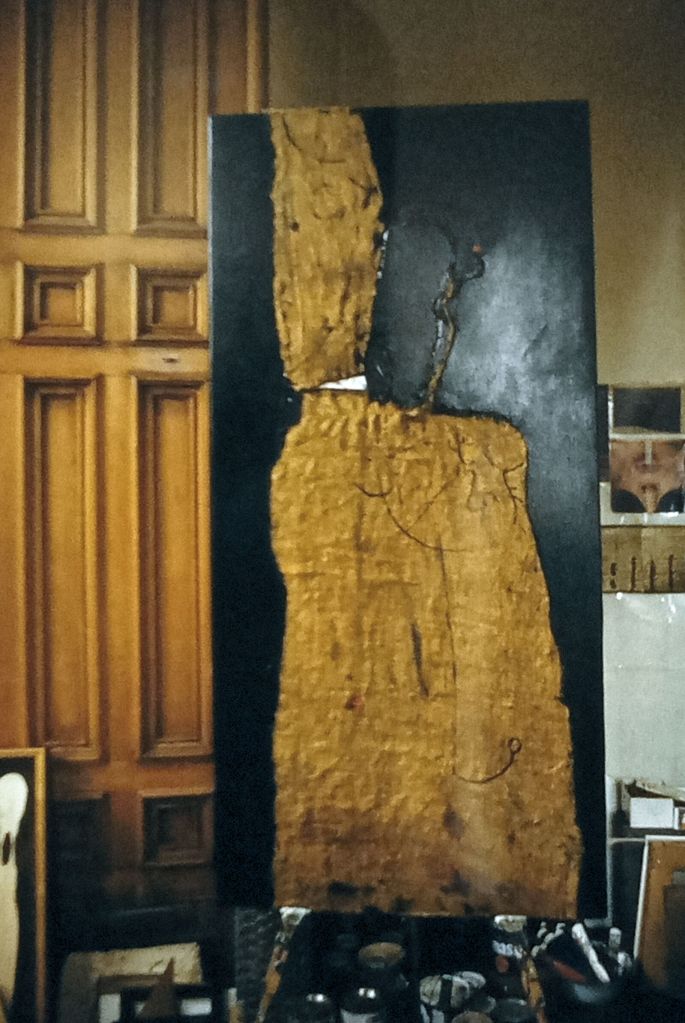
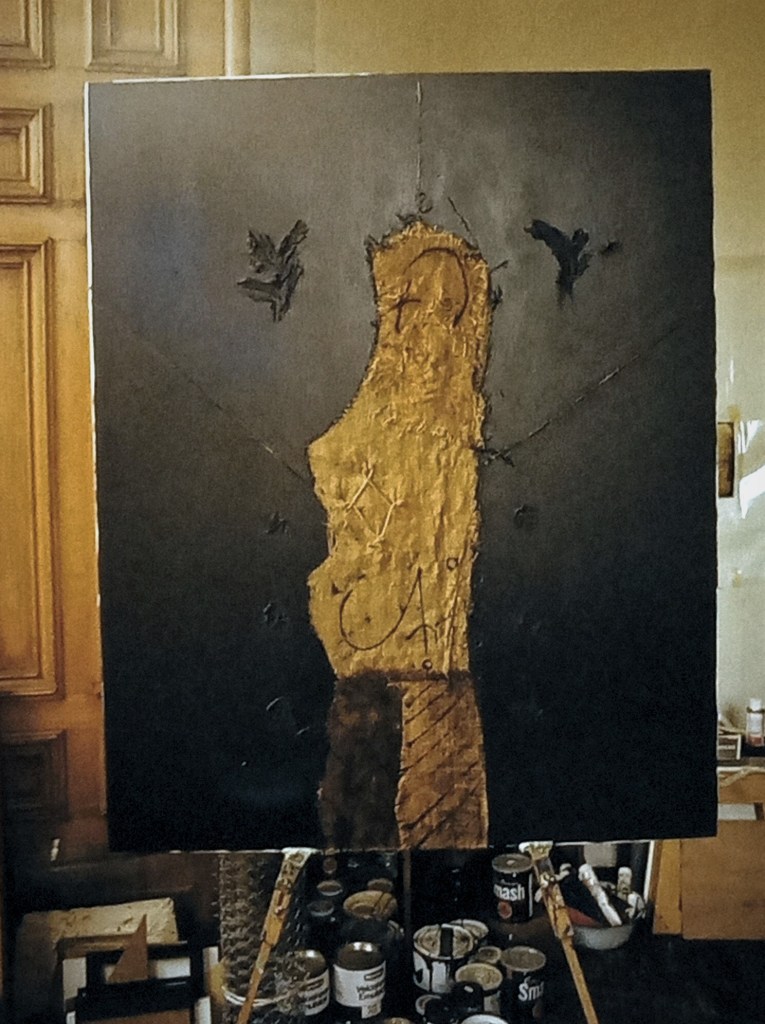
‘What interested me was how to make some universal sense from the background of this place and in order to do so demanded the use of alternative materials that were to be found there and combine them with painted elements that were to form a visual language which went beyond which could be said by the use of pictorial images.’
Statement by the artist, c 1998.
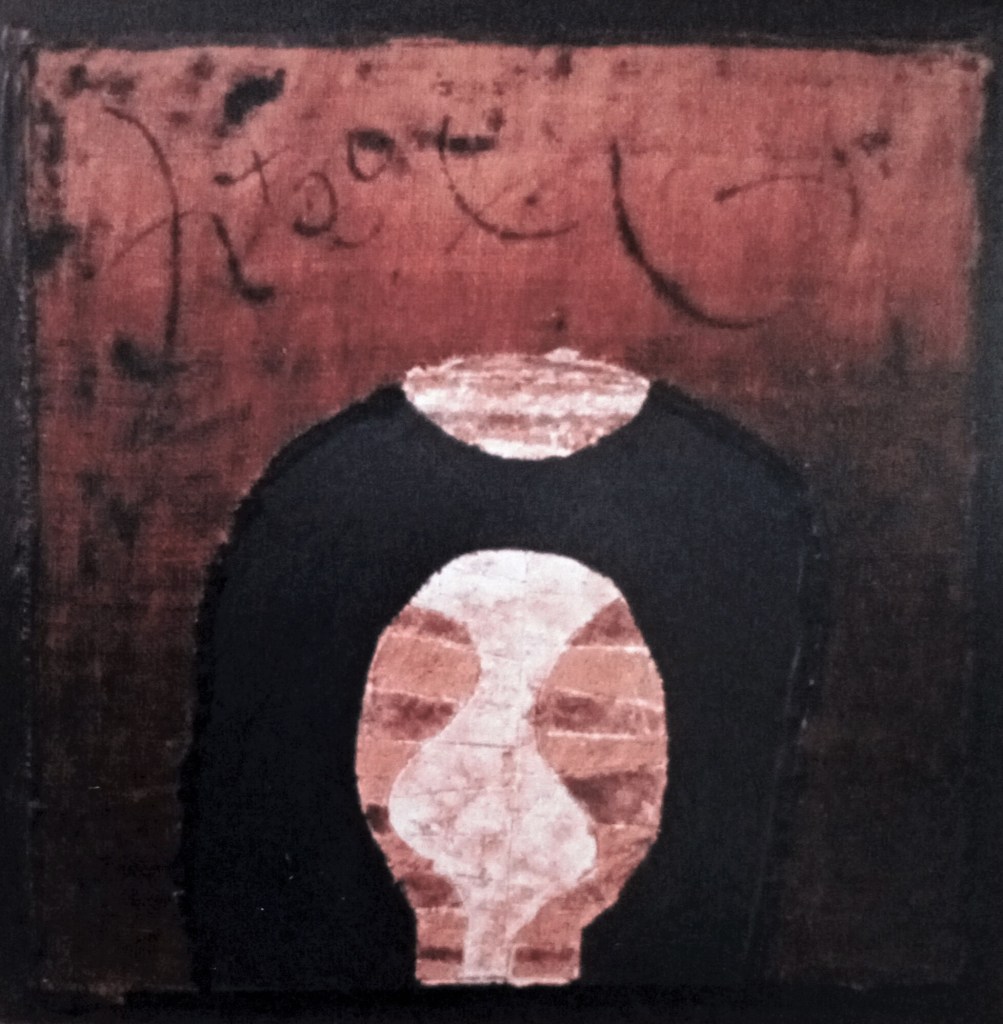
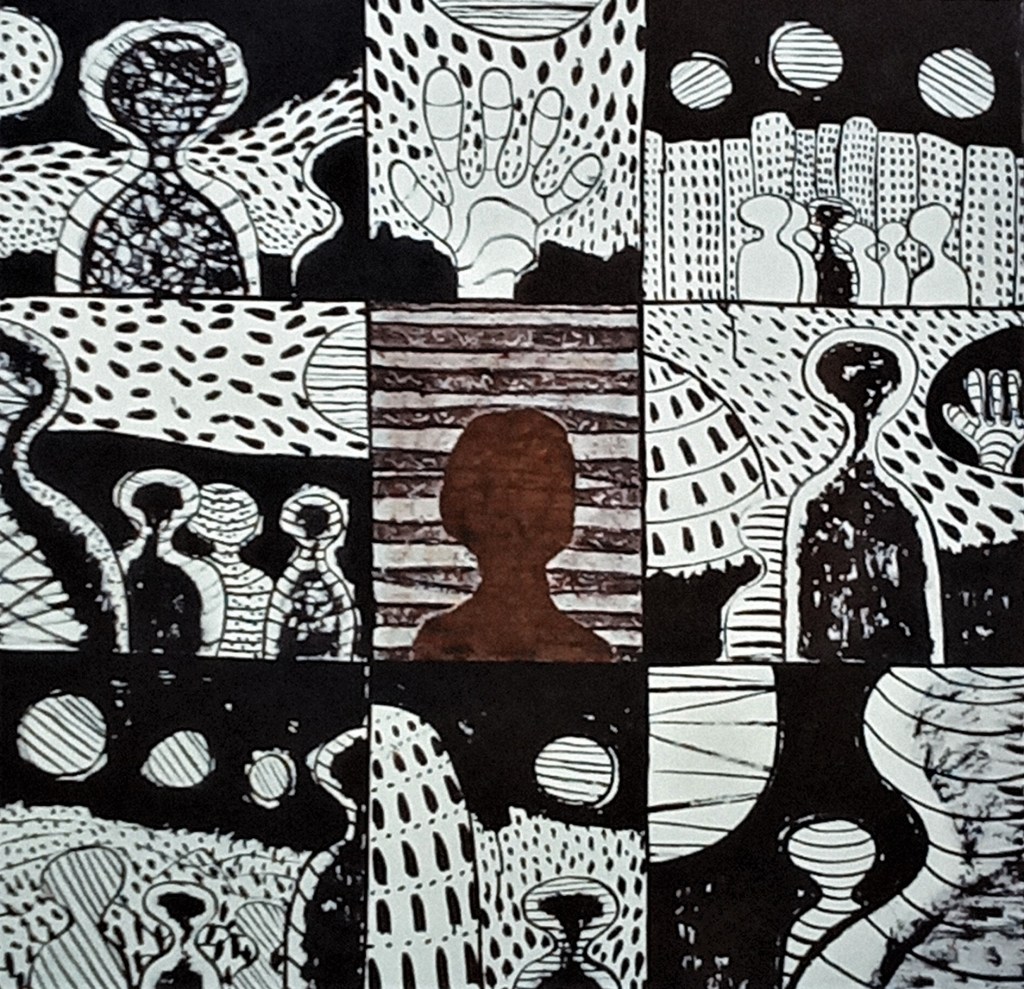
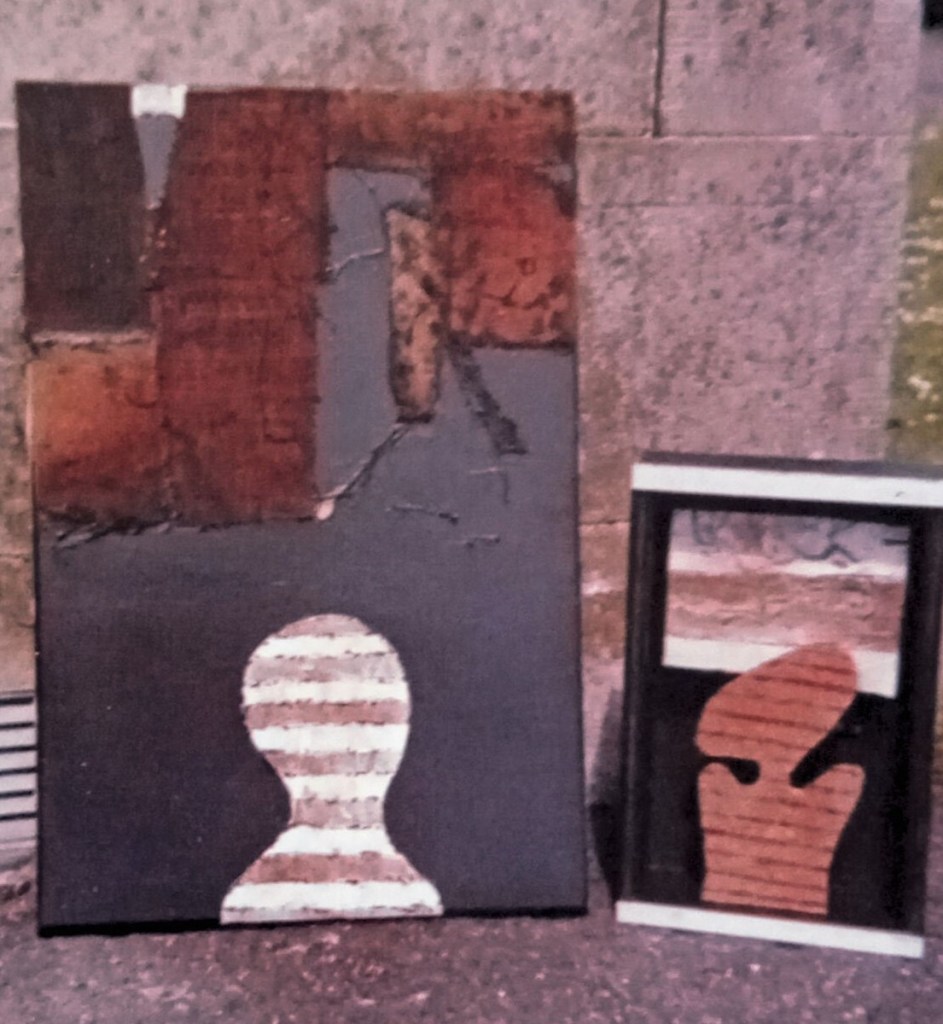
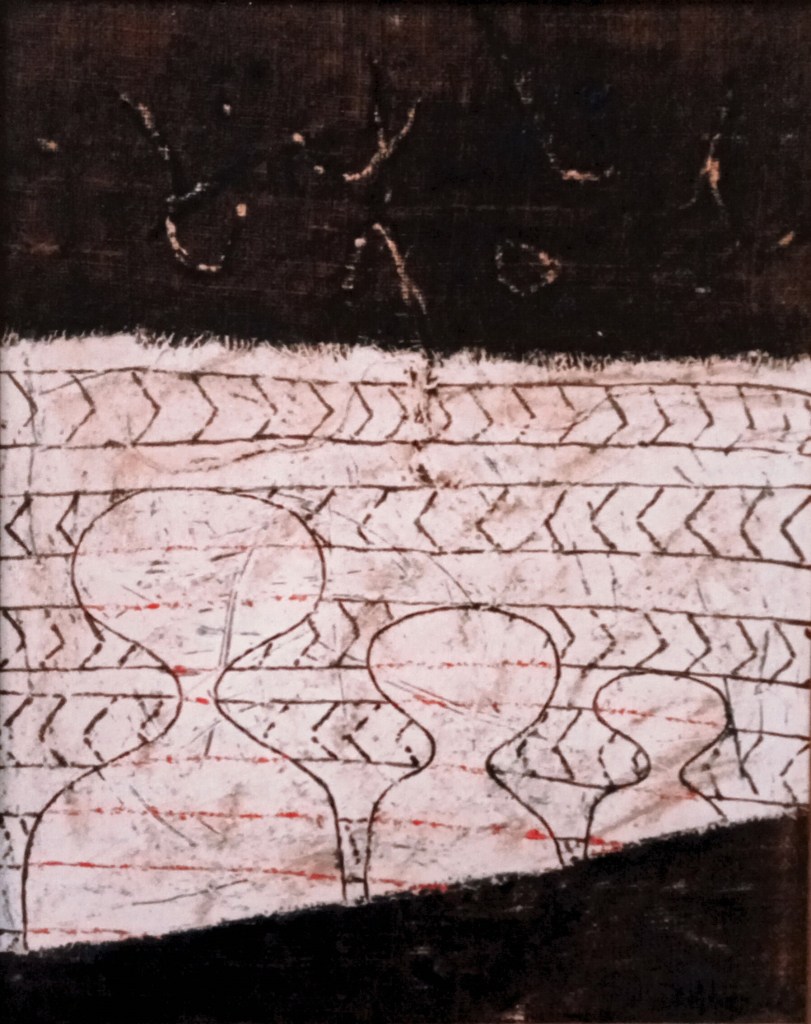
‘His favoured material is hessian which he contrasts with highly textured acrylic given the rough effect of a stone surface and smooth black surrounds and backgrounds. And the form that appears most frequently in his work is a kind of upper torso with no clear identity, their rough surfaces occasionally screened off in glass to look like museum boxes. It is this which gives his work an atavistic feeling, enhanced by the mysterious hieroglyphics that also appear now and again. There is a mood of ritual and half understood purposes, as there might be with objects newly discovered.’
Andrew Hutton, Review of exhibition at the Oxford Gallery, Arts Review, Sept 23rd, 1972.
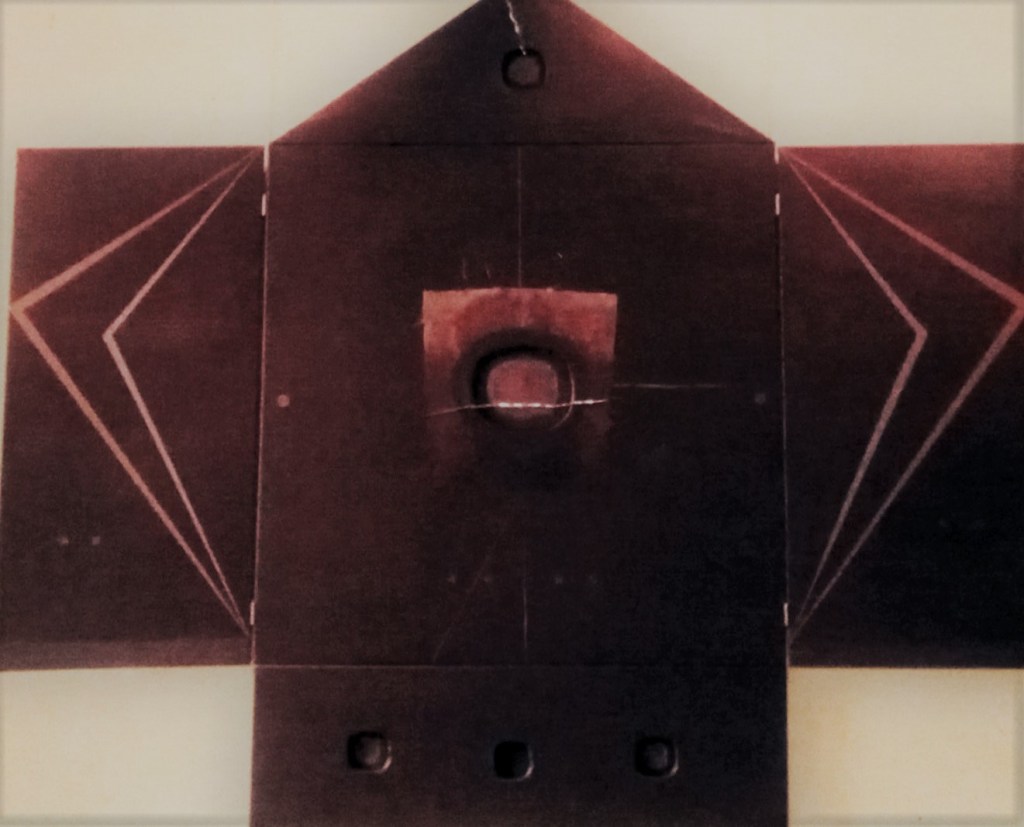
‘On examination, the paintings proved perhaps basically black, but not prevailingly black at all. Most were distinctly textured, with whorls, blobs and planes of grog (a sand and paint mixture), sometimes black and sometimes coloured, pink, green, brown and vivid red or purple laid on the matt dull darkness of the polyvinylacetate, a virtually indestructible paint. Pieces of burnt hessian, paper discs, and occasional fragments of metal were used in collage, and in many of the paintings there were either in curving holes in the canvas, revealing another surface below, or raised bumps and mounds’.
A Hewitt, Interview with the artist at Aberdeen Arts Centre, 1969.
Black Environment No 4, which can be viewed via the link below, was shown in the exhibition ‘Consider the Lilies’ at the Dean Gallery, Edinburgh, in 2006, before it transferred to the Fleming Collection in Mayfair, London, in 2007. The exhibition was a celebration of Dundee’s collection of Scottish Art from 1910 to 1980. Renowned art dealer and expert on Scottish art, the late William Hardie, who collected Cargill’s work for his own collection, and was responsible for the acquisition of Black Environment No 4 for the Dundee City Art Gallery Collection, said he ‘admired the artist’s single minded devotion to his own painting, which is highly individual in the Scottish context’.
https://artuk.org/discover/artworks/black-environment-no-4-92250
Object for Anytime
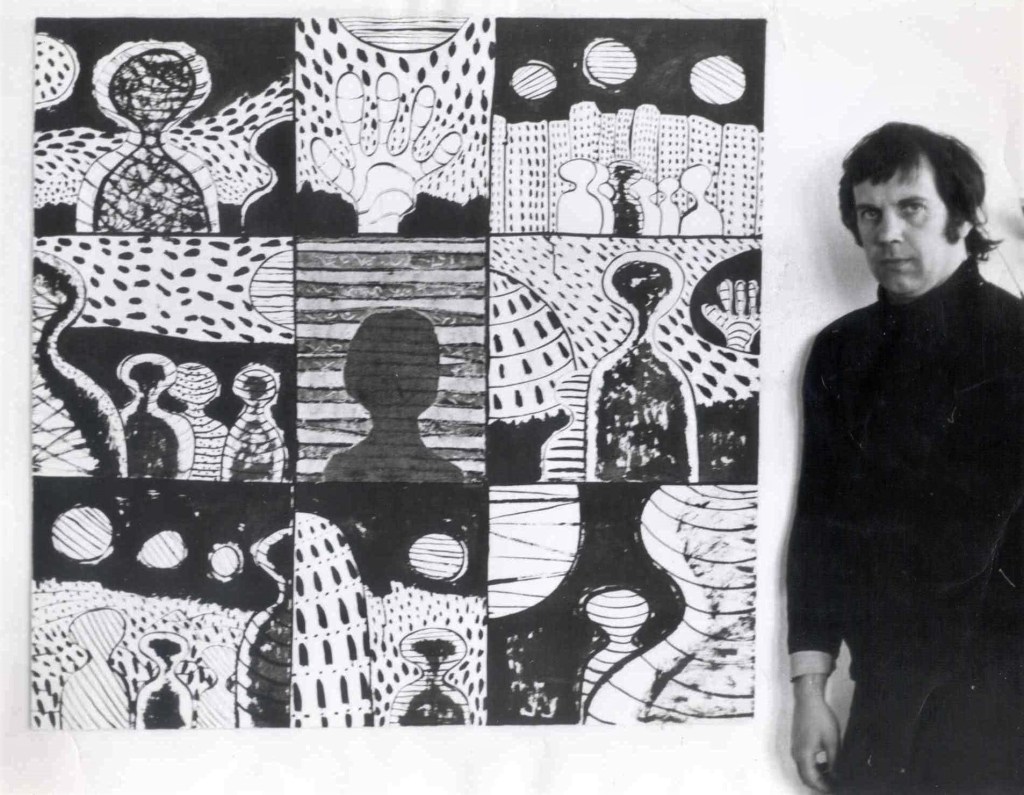
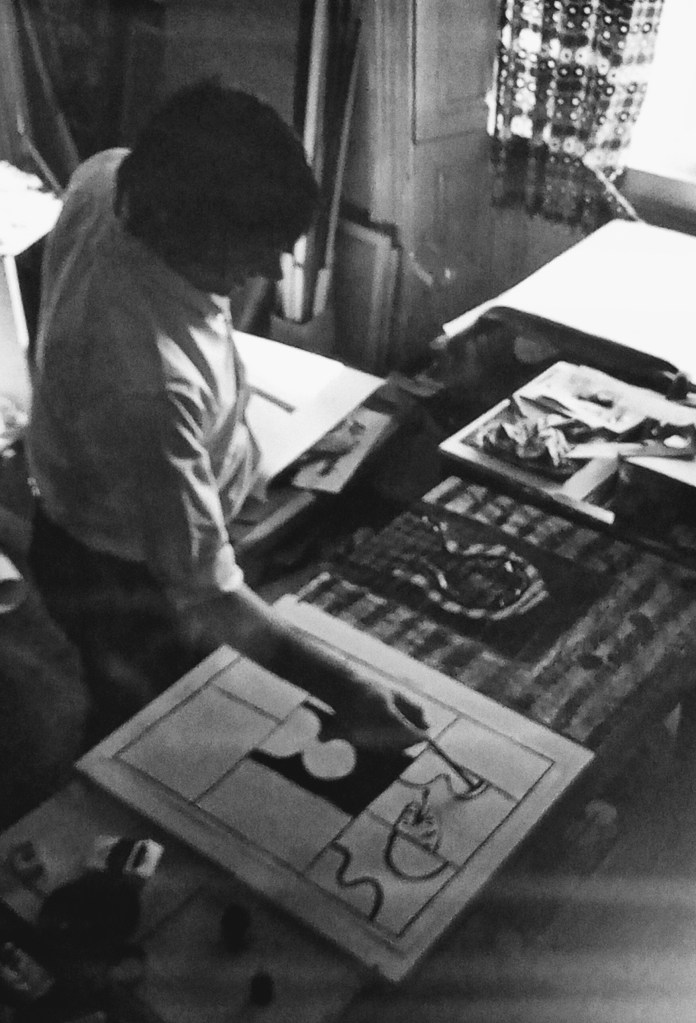
At the same time as creating the large collage works with burnt hessian, the artist produced a series of works which consisted of related panels either hinged or linked together by chains. The juxtapositions of fresh surfaces and new effects of light which resulted in the moveable panels meant the viewer could experience, and partially create, a range of visual insights from a single work.
‘It was his intention, he explained, to invite the viewer to take an active part in the paintings, instead of just standing back and letting them do all the work. The visual arts needed some such scope for audience participation if they were to be brought back to life, and it was no good if people could not get involved in paintings’.
A. Hewitt. Interview with the artist, 1969.
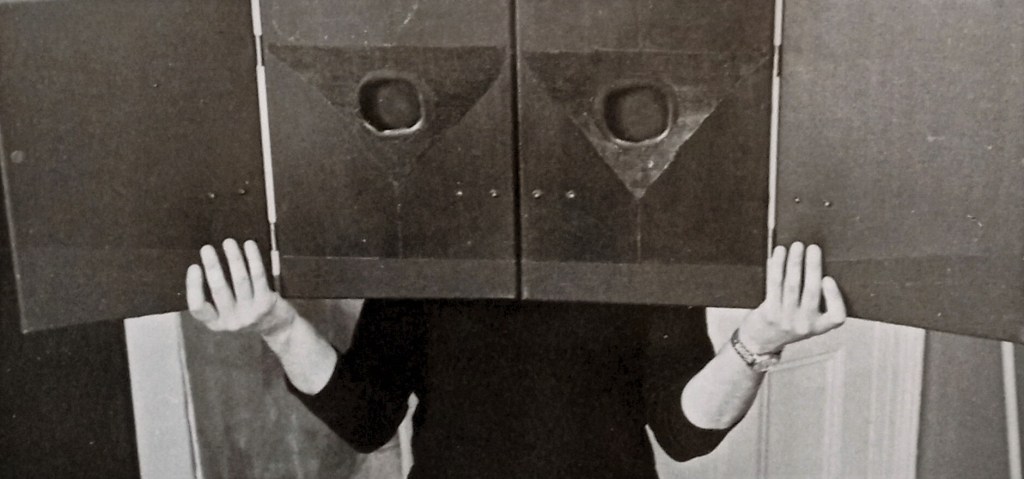
‘He was making twentieth century statements about twentieth century topics, which required an awareness of the past and future as well of the present. Although the onlooker could question the painting, they must also be prepared to let the painting question them. And that no doubt, was why one felt such a sense of challenge on being confronted by Robert Cargill’s work.’
A. Hewitt, interview with the artist at Aberdeen Arts Centre,1969.
Copyright of the artist’s archive © 2026.
 Robert Cargill