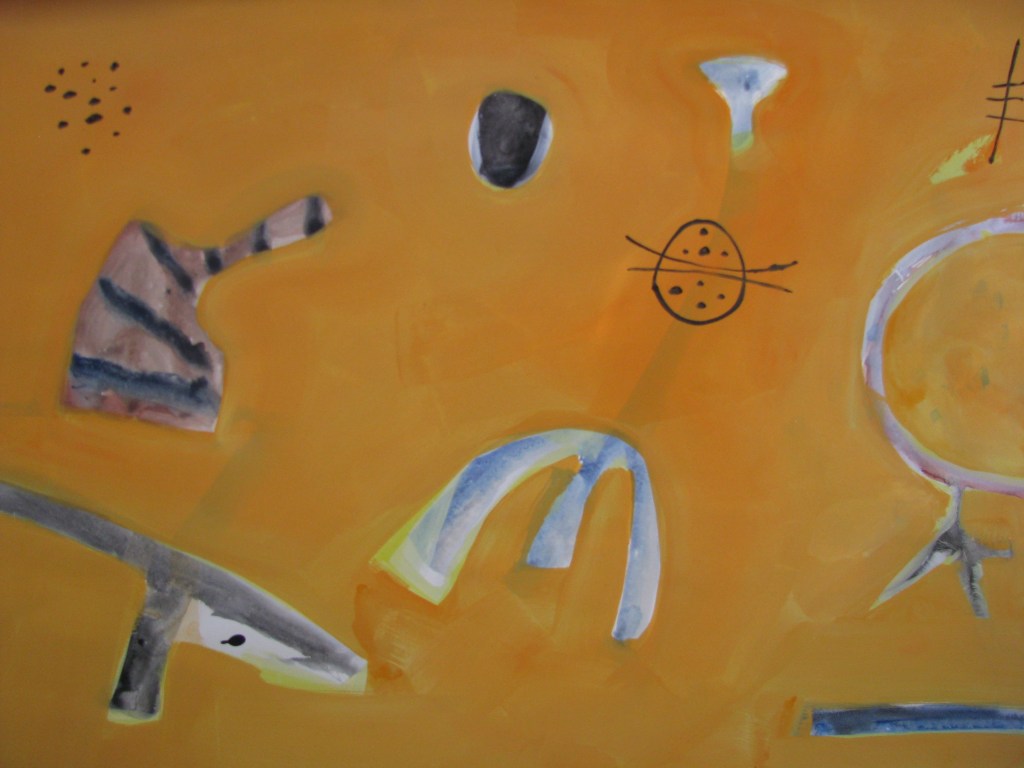
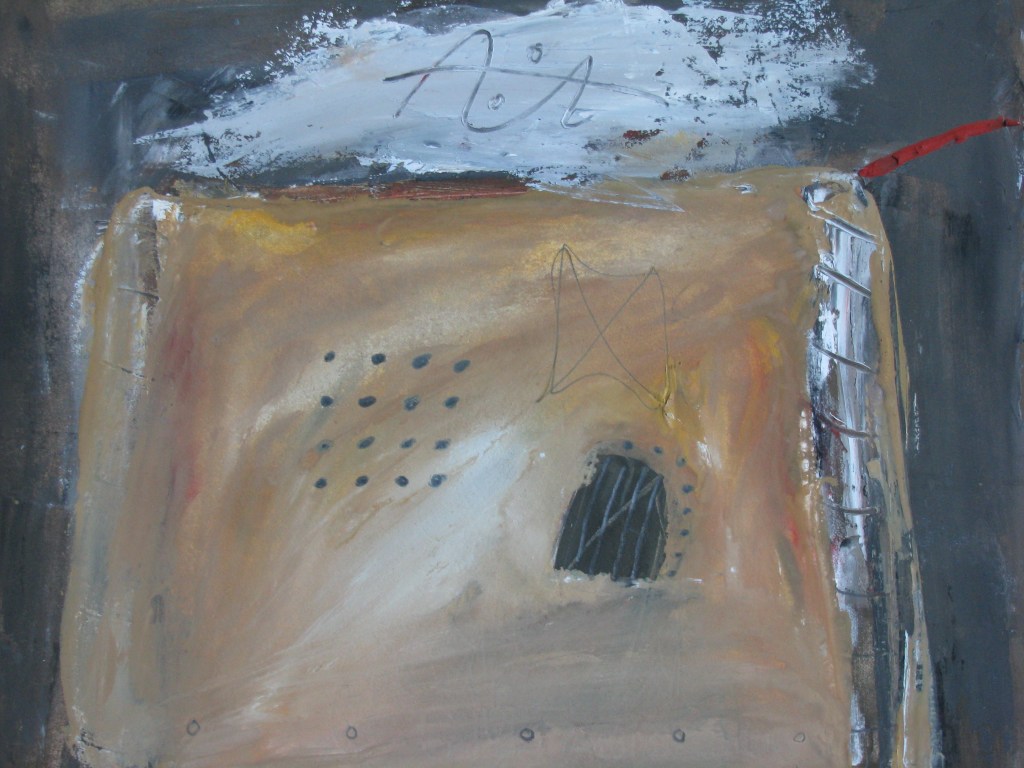
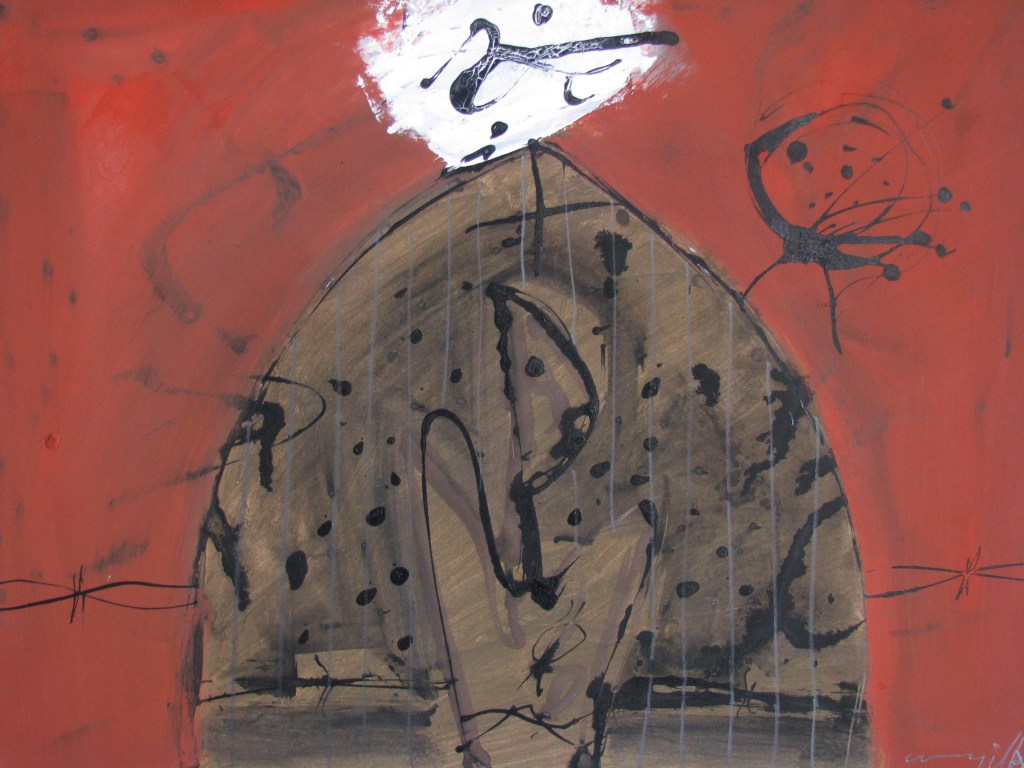
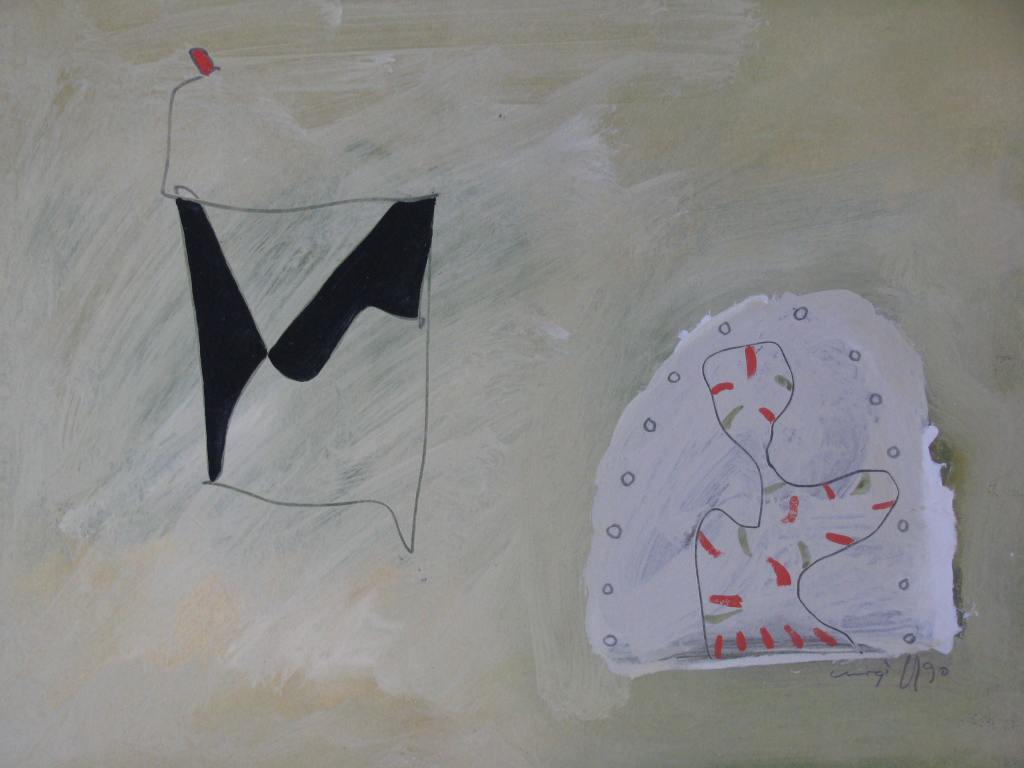
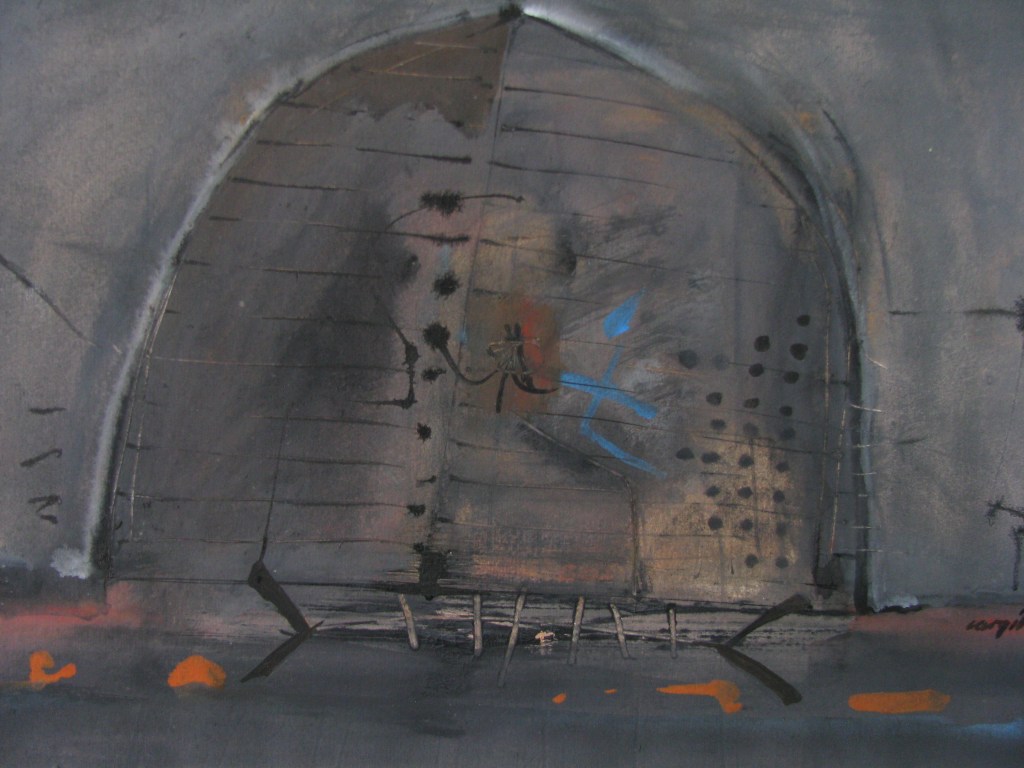
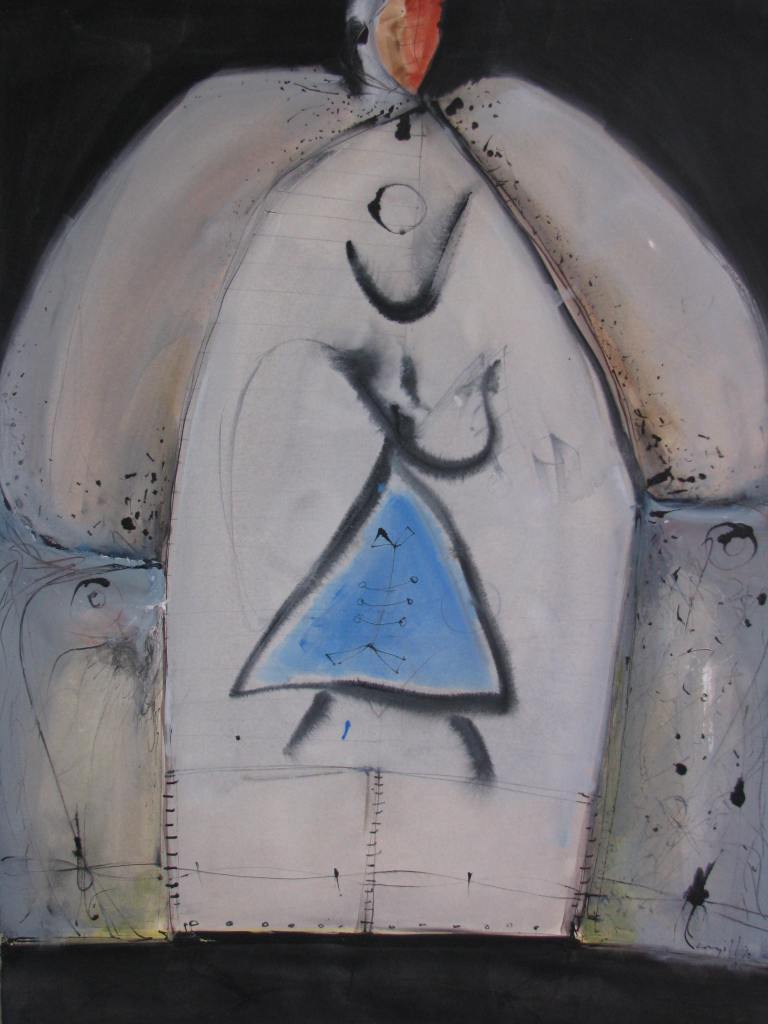
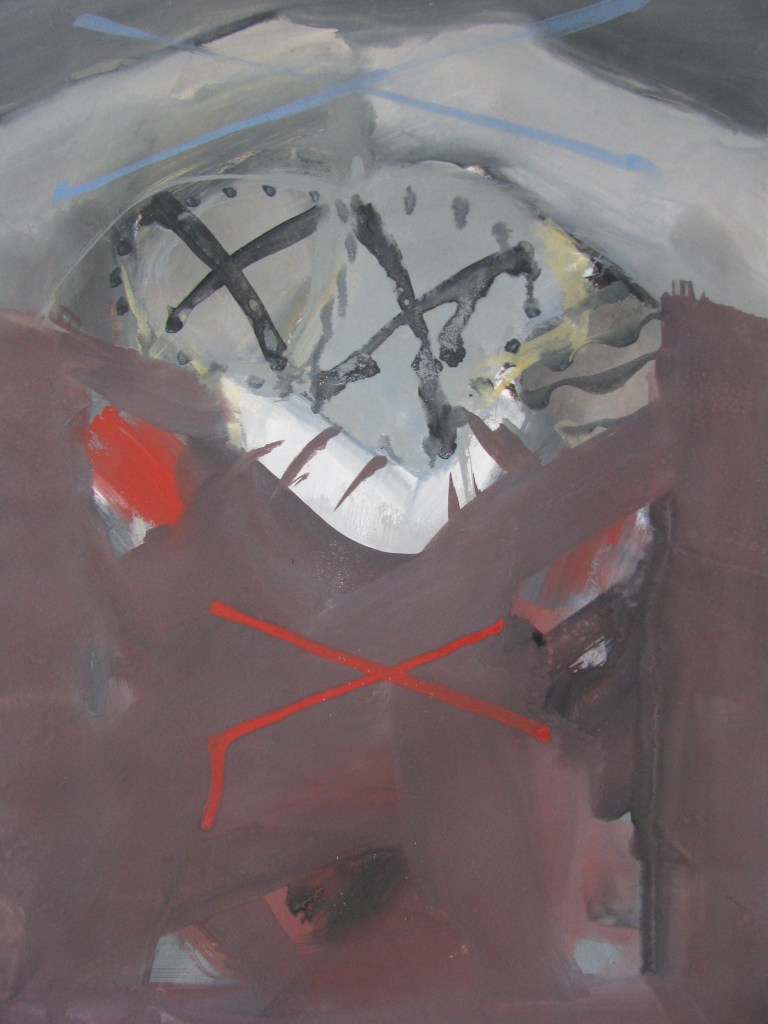
In 1979, the artist left his home and spacious studio at Bloomfield House where he had lived and worked for nearly ten years, and moved back to live in what had been the Cargill family home for nearly a century on the High Street of Arbroath. This was where he had been born and brought up and where his fisher parents and grandparents had lived and worked. From the attic window he could look down the street below to the sea. The reduced studio space brought a change of direction in his creative output and he started to produce smaller scale works using mainly gouache. From this point on he exhibited far less with commercial galleries and began to show his work from a gallery space he had created at his home. In the late 1980s he made several working visits to Catalonia, mainly to Cambrils and Tarragona. These visits influenced his work, in which along with the mysterious mannequin figure, arches and doors featured prominently.
‘The long series of works that for years came under ‘Black Environment’ were followed by another long series with consideration to particular images of the coast. Those images were worked mostly in gouache, partly from economic reasons along with the intention to produce a number of works without the use of collage. A variety of pressures reduced those works to a minimum and on to the point that I lost all interest in the place creating a situation with long periods when I produced little to no art at all. It was visits to Spain and later to Mallorca that lifted me above that situation when everything other than art dominated the day and creative energy were reduced to zero and I found new motivations in another country.’
Robert Cargill, 1998.
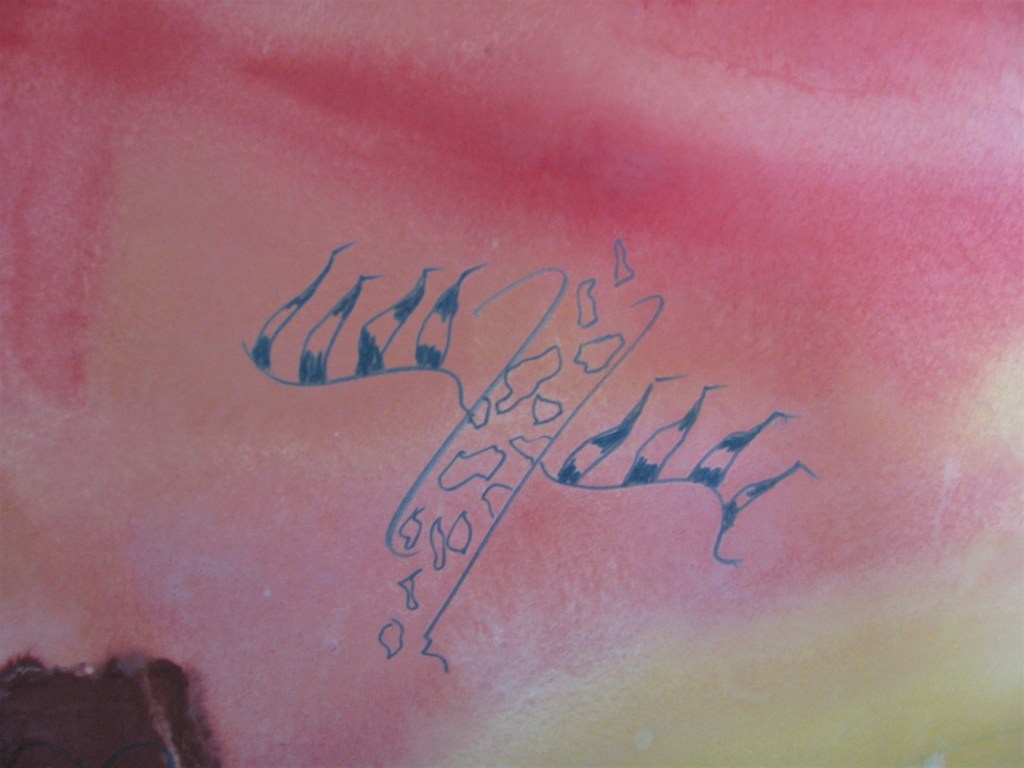
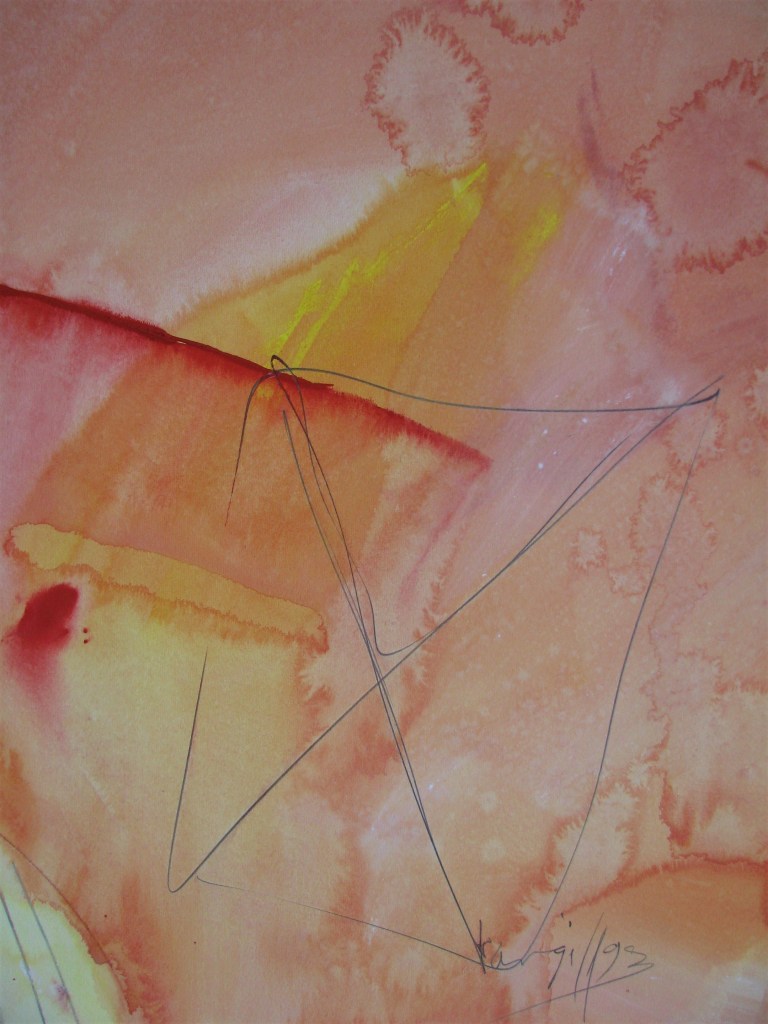
‘The works form an area between reality and abstraction. They may lean heavier one way or the other. They are derived from personal experiences with nature, natural phenomena, man made environments and objects. ‘
Robert Cargill, 1998.
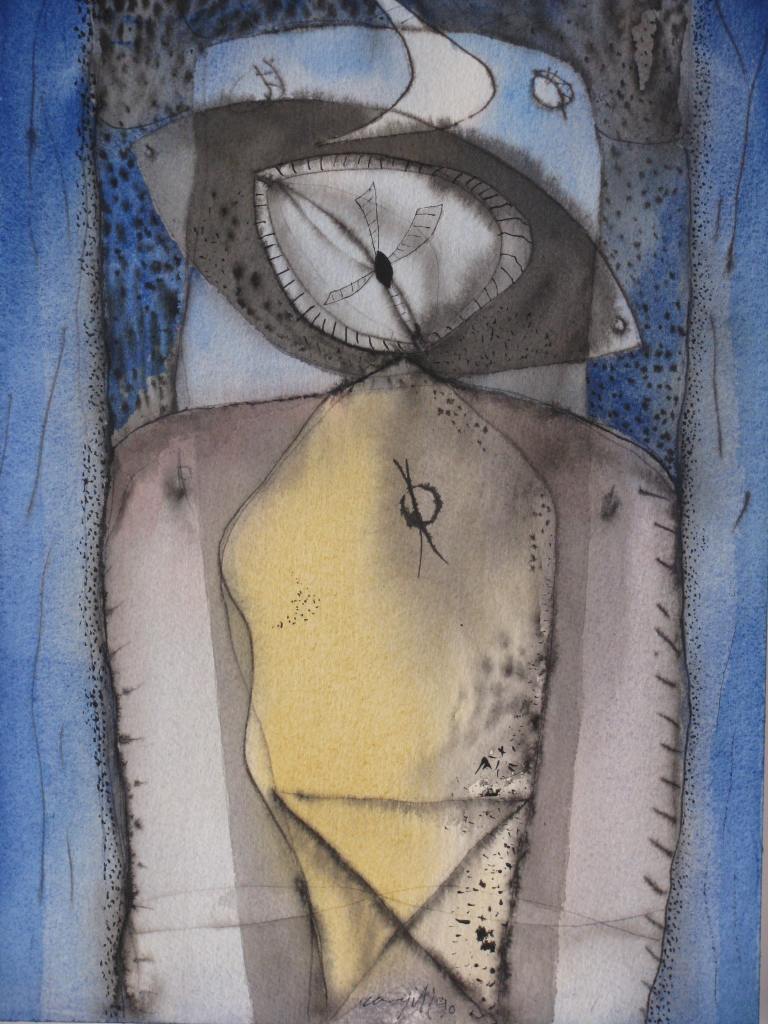
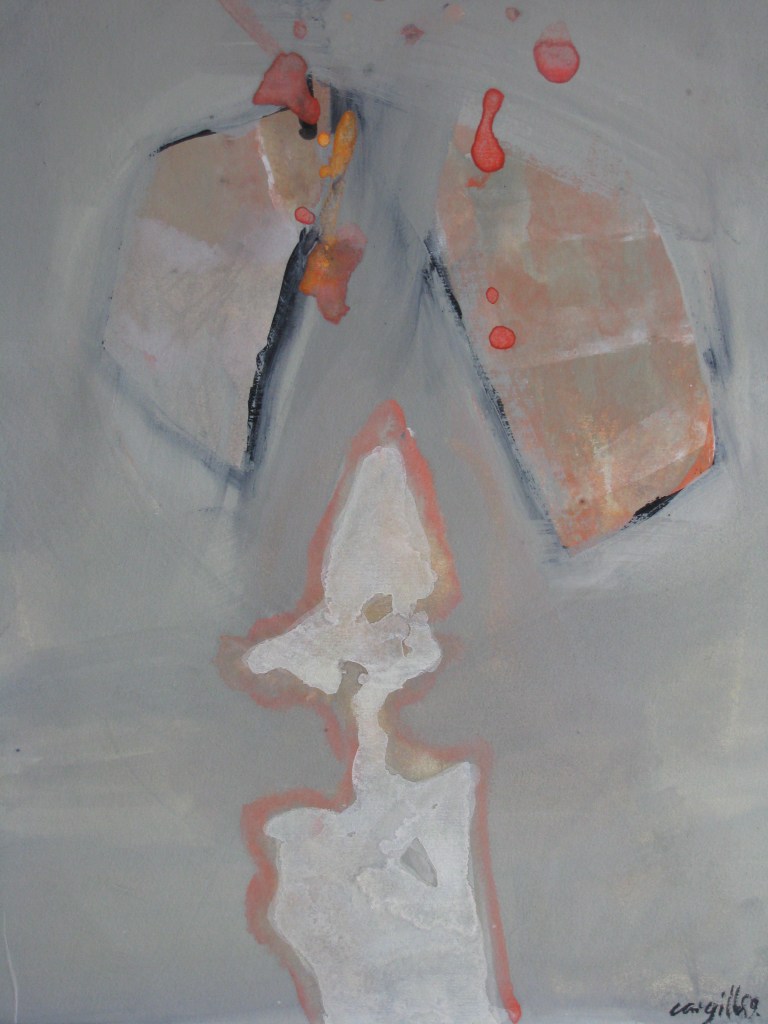
‘The mannequin figure shape is a projection of the self, a presence, a viewer, a witness. It will put you in my place. It will put you in your own place as a viewer of the painted image. It may even make you aware of yourself as a witness to your own experiences. As for the rest, they are brought about by the long experience of living on the coast, but they can also relate to any coast. They are about place, colour, texture, the elements, mood and weather. They are about being.’
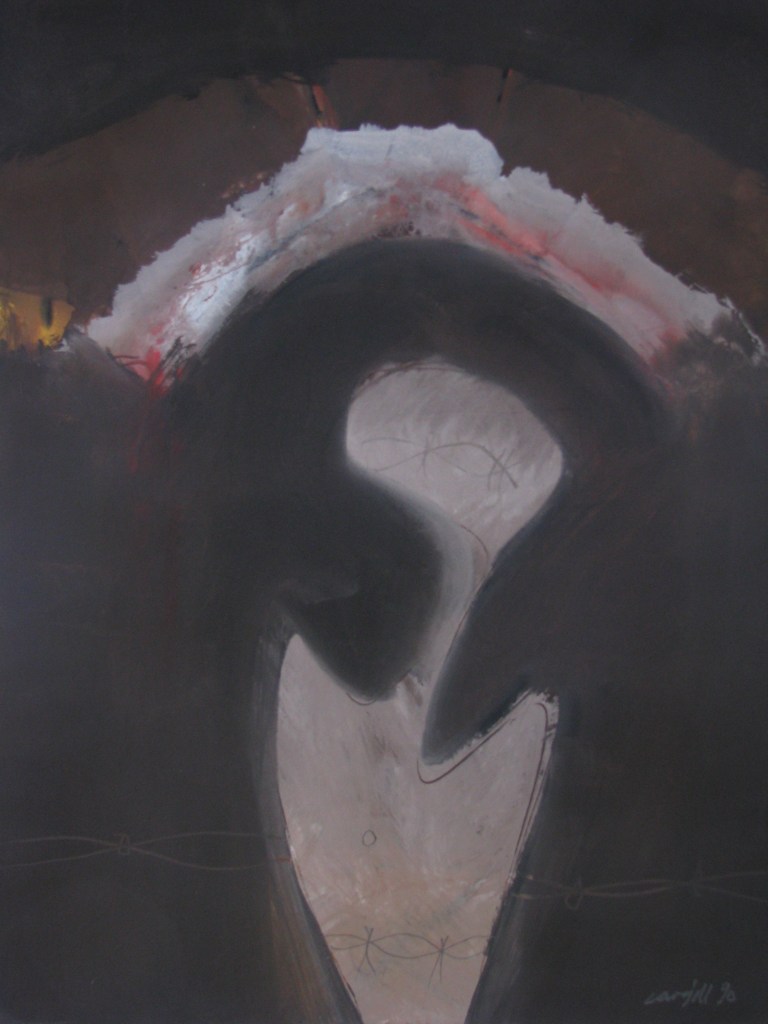
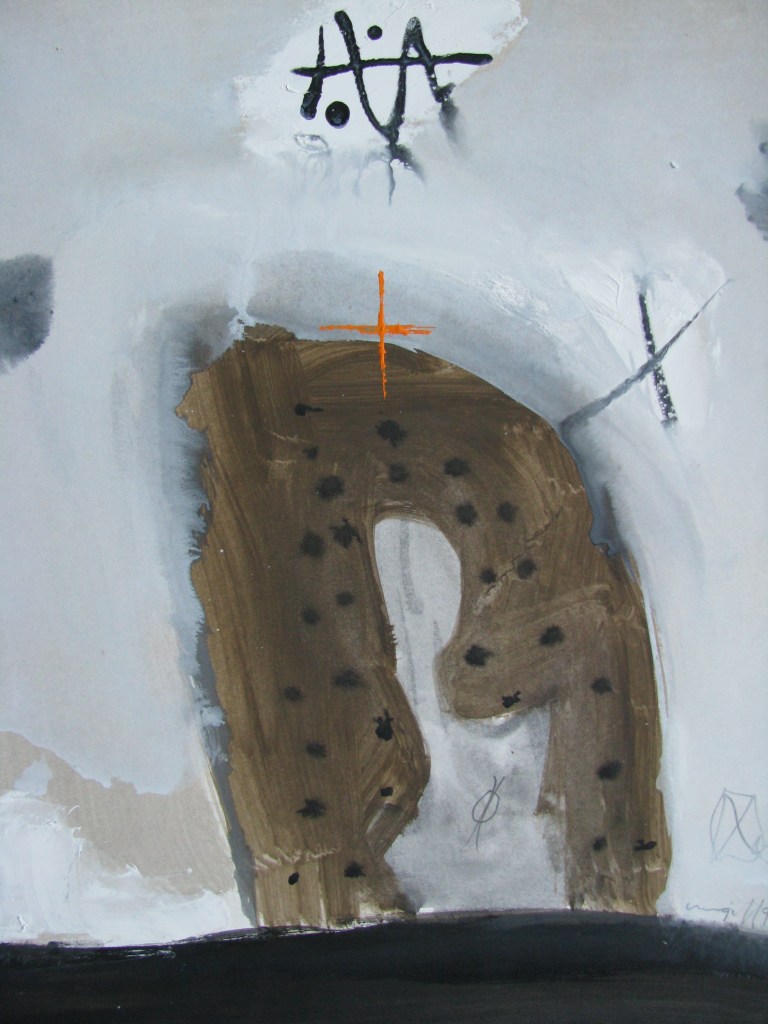
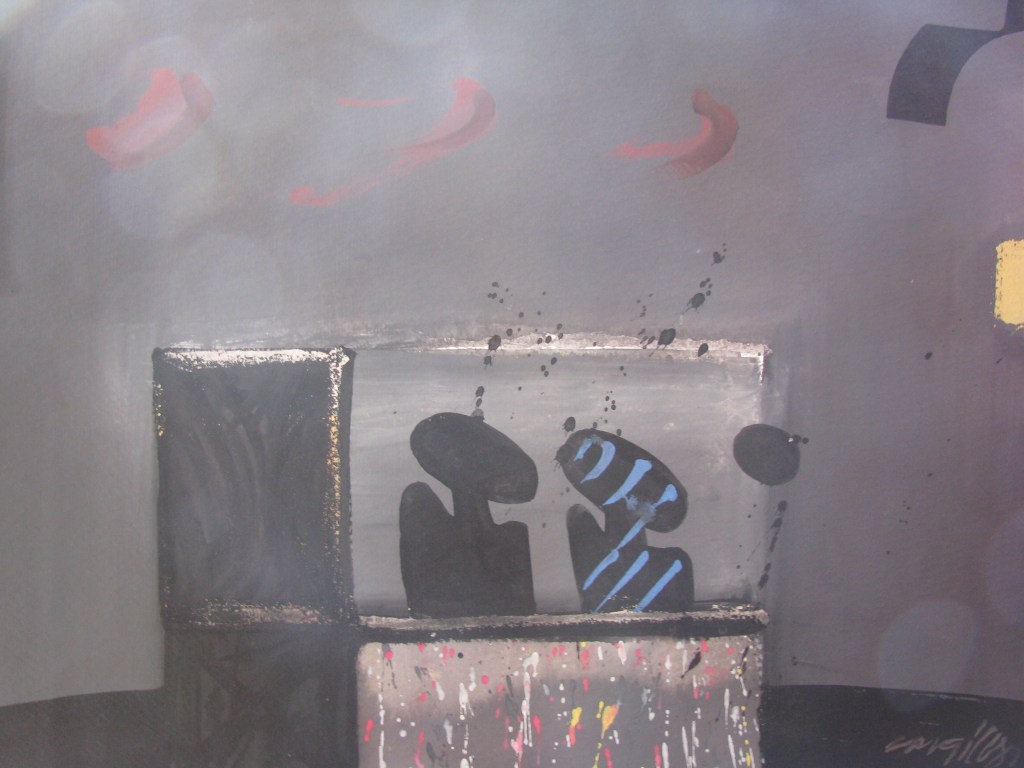
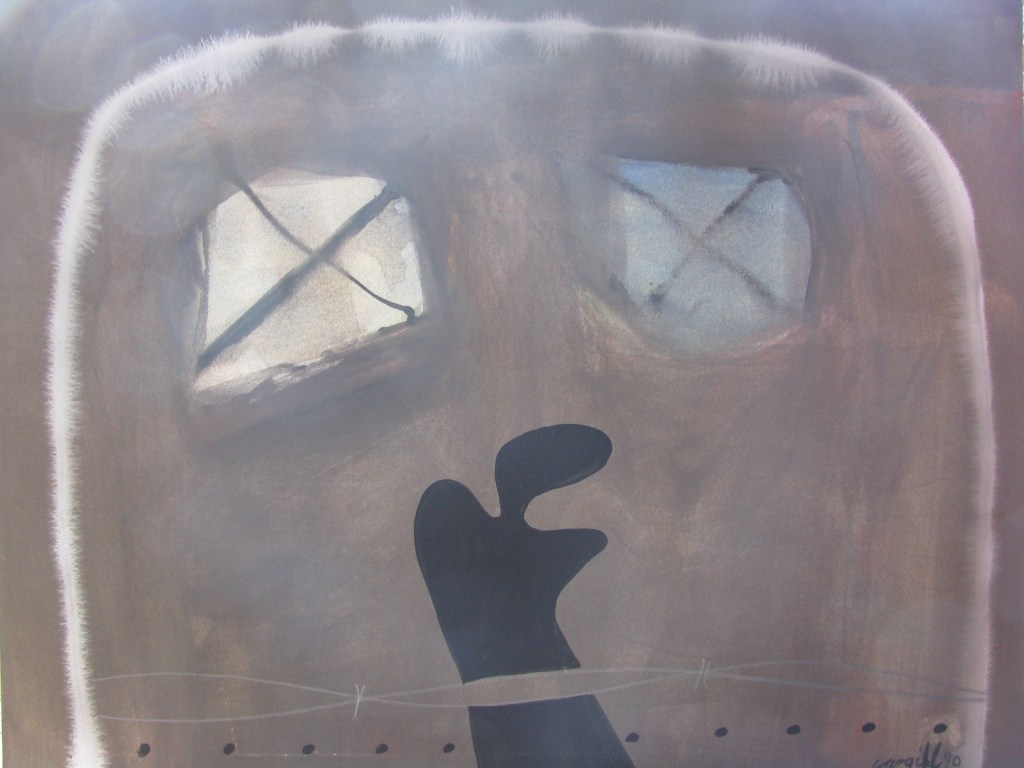
‘Geographically and culturally too, he finds source material in the north east coast of Scotland… his other source material comes from Spain… Using oil, gouache, watercolour or acrylic, colour temperate changes climatically. Nevertheless, Cargill has a magic touch with blacks and greys…he also deliberately ventures in the footsteps of Joan Miró… but where Miró arranges flat shapes on a ground, Cargill floats luminous blobs in moody space.’
Edward Gage, The Scotsman, February 1989.
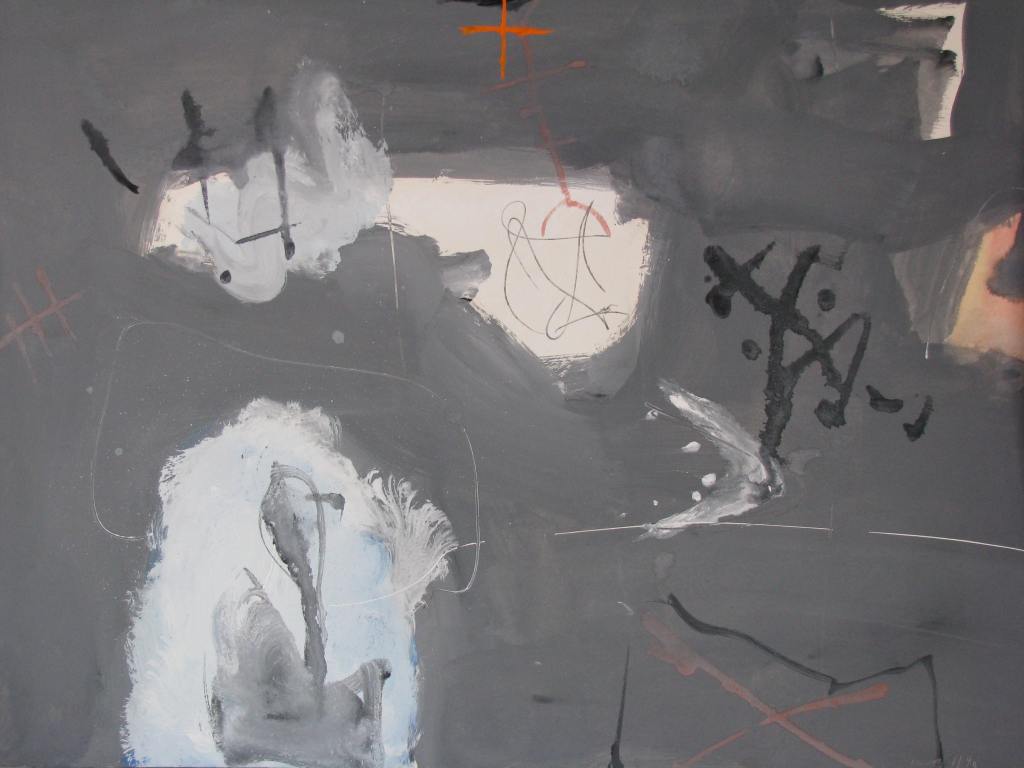
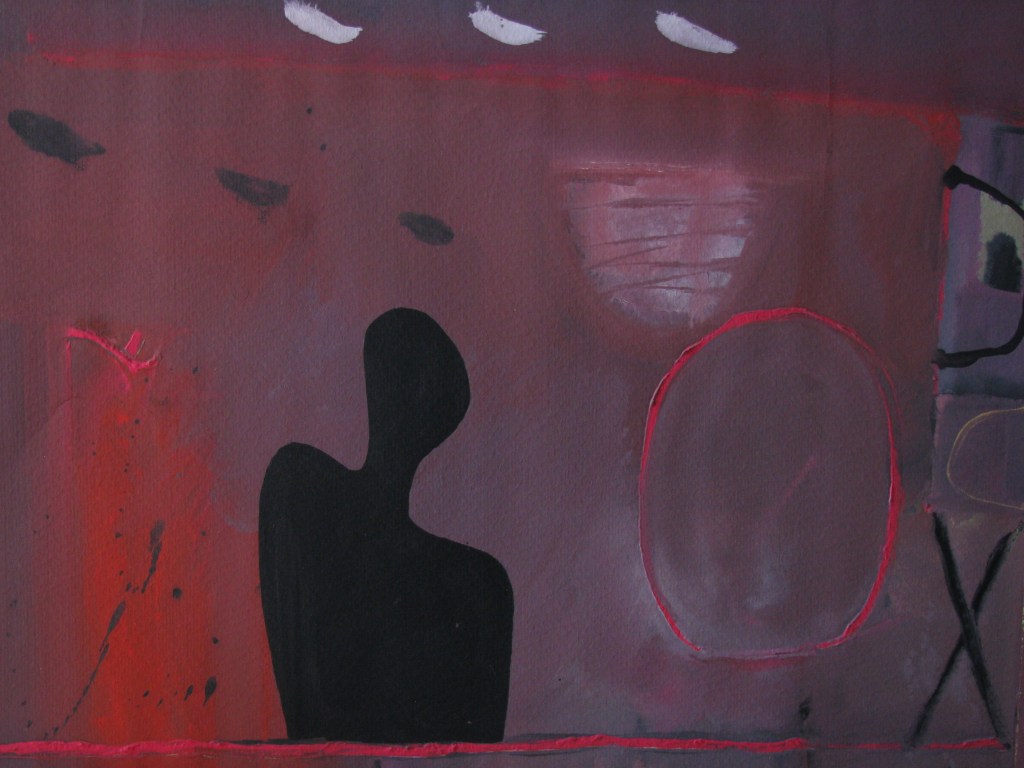
‘.. Robert Cargill’s achievement lies in his ability to identify himself, not with any fashionable concept of a ‘New Scottish School’ of painting, but with the wider more significant areas of a European School in which the ground rules have been established by such luminaries as Joan Miró, Alberto Burri, Antoni Tàpies, and of course Pablo Picasso.
His capacity to identify himself with Southern Europe and in particular Iberia, has caused him to work in Catalonia over the past three years.
However, the Spanish flavour in his work was not at all distant from the architecture of Arbroath built as an environment for boat builders and fisher folk to earn a hard living from a habitually angry sea.
The fishermen’s cottages had white painted interiors. Smoked hessian and rope and netting were about texture as well as colour. The dull red sandstone of Arbroath Abbey and the cliffs around the Deil’s Heid, the Mermaid’s Cave, the Witch’s Rock and the Witch’s Hat which are all rocks from around Auchmithie and Arbroath were significant not just for their sculptural forms but also because of their warm, red colour and texture.
All of these local, historical and geographical features, together with the forms of fishing boats and their gear and tackle provide the stuff of Robert Cargill’s paintings.’
Richard Demarco writing in Edinburgh and Lothians Post, May, 1989.
Copyright of the artist’s archive © 2026.
 Robert Cargill