The stretch of coastline between Arbroath and the neighbouring village of Auchmithie is steeped in folklore and superstition. Mariner’s Grave, Mermaid’s Kirk, Dickmont’s Den, and Forbidden Cave are a few of the names given to the coves and caves along the way. It was the Deil’s Heid, a huge mass of rock jutting out from the sea, which featured prominently in the artist’s work.
‘Just to the north of Arbroath, where Bob Cargill has lived all his life, is one of the most impressively dramatic coastlines in Scotland. The sea has carved the soft red sandstone into strange surreal caverns and layered monuments, while the harder pebbles have ground the red rocks into smooth sinister holes. One immense crag, known locally as the Deil’s Heid, stands as high and as awesome as a medieval keep, distorting one’s sense of scale in a most alarming manner. Again and again in his collages of torn, smoked hessian laid in layers on shiny black grounds. Cargill makes reference to these natural but strange forms and to the Deil’s Heid in particular – makes reference that is, to his long and intimate experience of their existence…
Another more homely reference in the singed hessian and shiny black canvases is immediately traceable to Cargill’s own family connection with the craft of smoking fish.’
From New Tendencies in Scottish Art exhibition info, 1969.
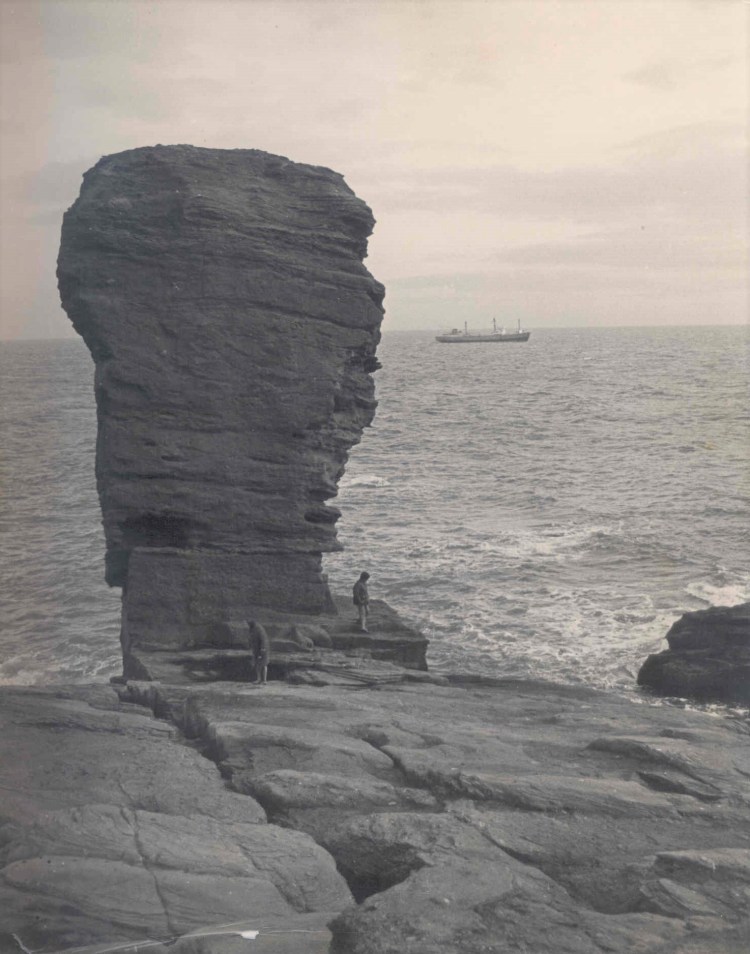
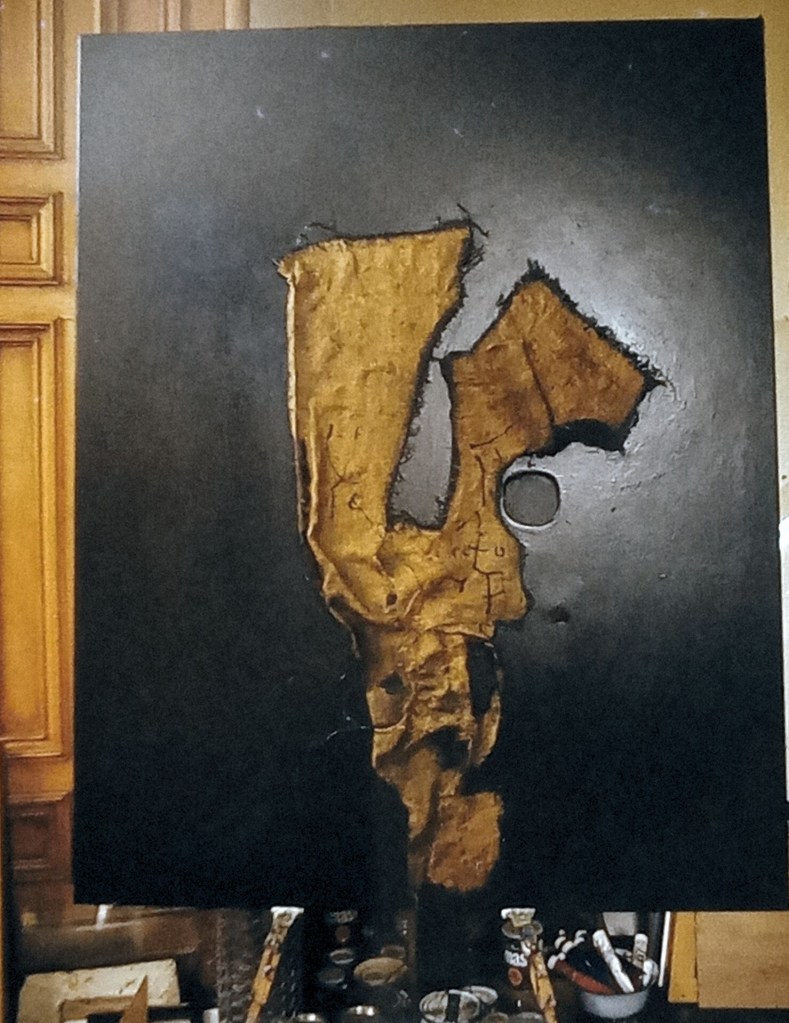
‘I used the Deil’s Heid rock as a kind of universal symbol. It held the mystery of time, space and the constant changing of things. Steeped in folklore it also bares resemblance to the human head and spirals only without the same function and reason as the megaliths through the universe. Over the past four years my investigation of megalithic stone circles has opened new insights, offered new signs, new symbols and in many ways did not seem far removed from what I have been considering on the east coast of Scotland. ‘
From statement by the artist, 1979.
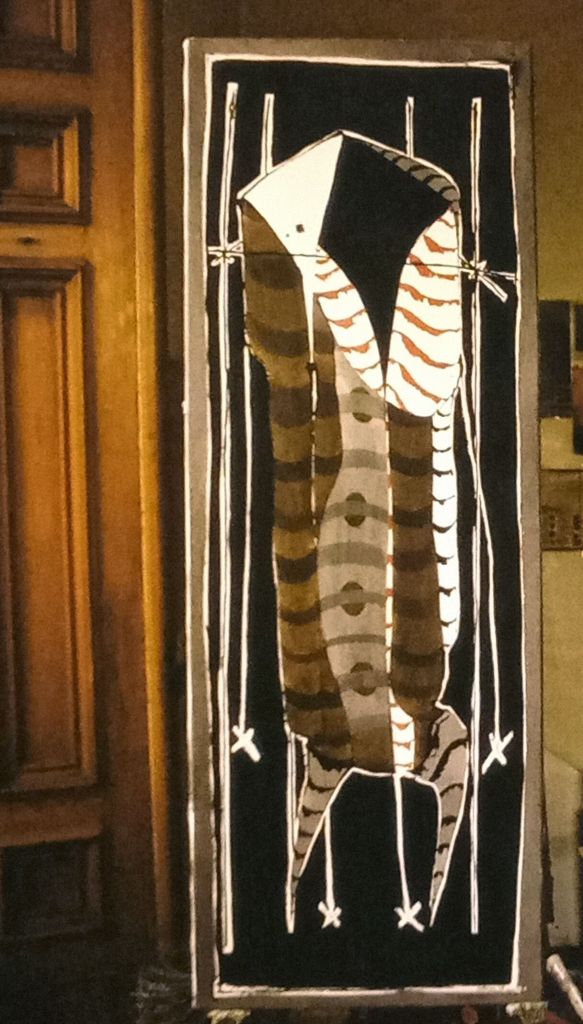
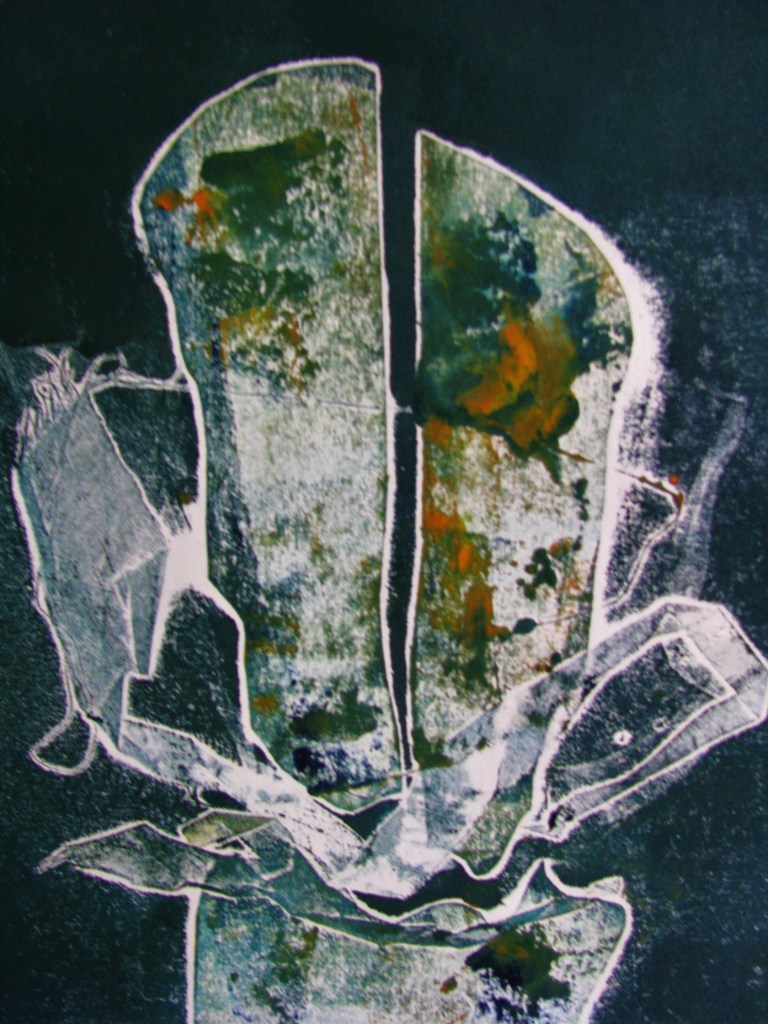
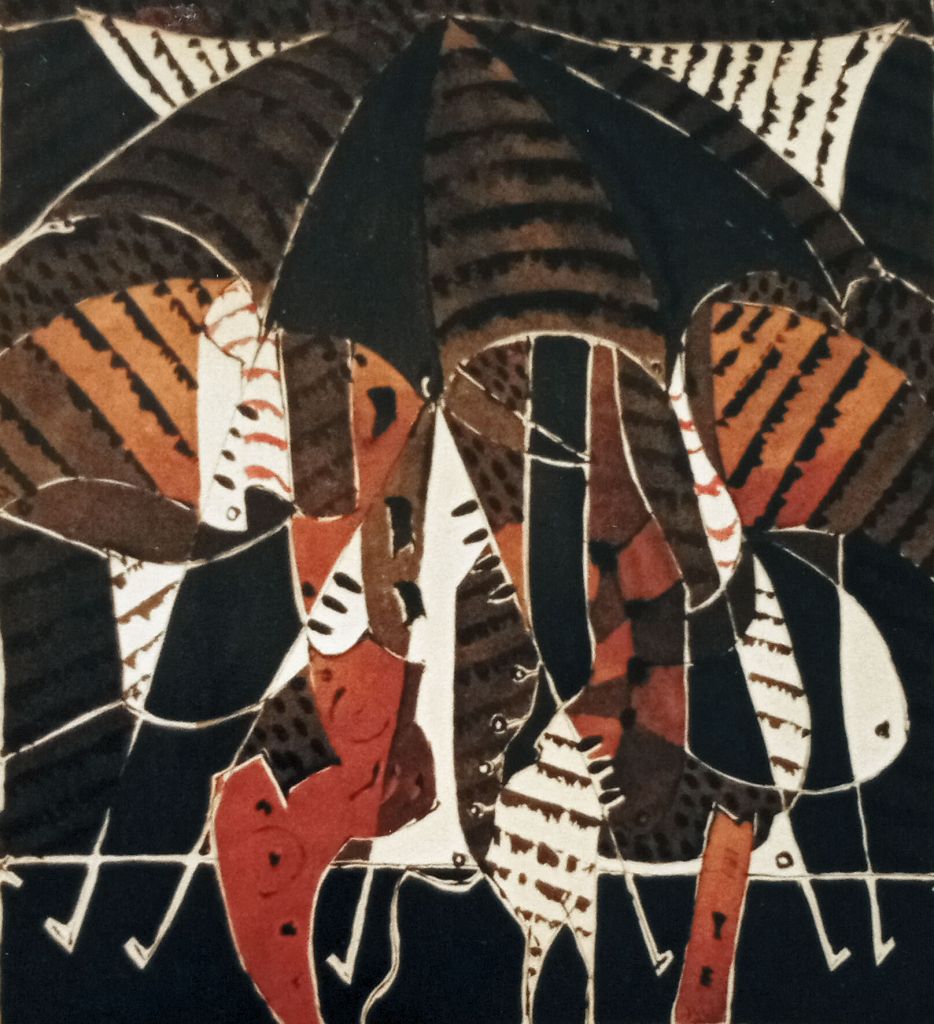
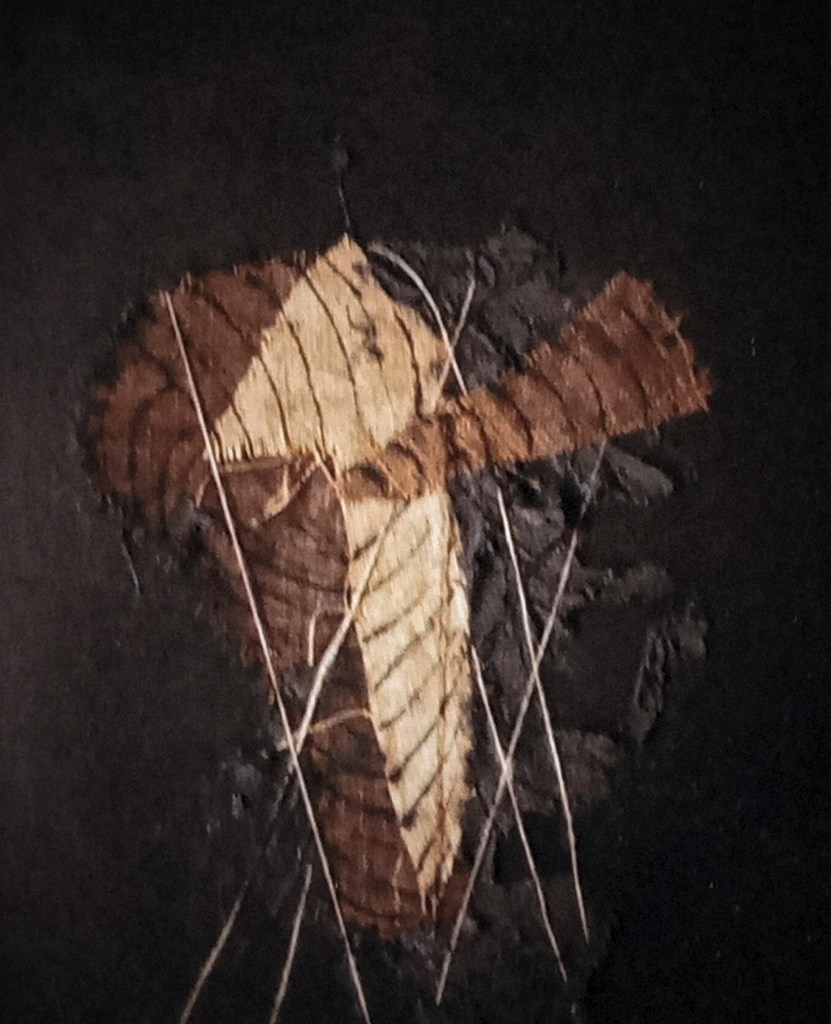
‘He was, he said, extremely conscious of the natural fragmentation of the landscape, of the continual process of corrosion and erosion going on in the course of the lifespan….’
A. Hewitt, interview with artist at Aberdeen Arts Centre,1969.
‘Some very recent ink studies tell of his fancy (not yet implemented in fact) to cage in with scaffolding, the largest, most sinister of the rock forms, the sixty foot towering monster known by the locals as the Deil’s Heid.’
Cordelia Oliver, from the review of Six Scottish Coastal Artists at the Demarco Gallery, The Guardian, Jan 29th, 1975.
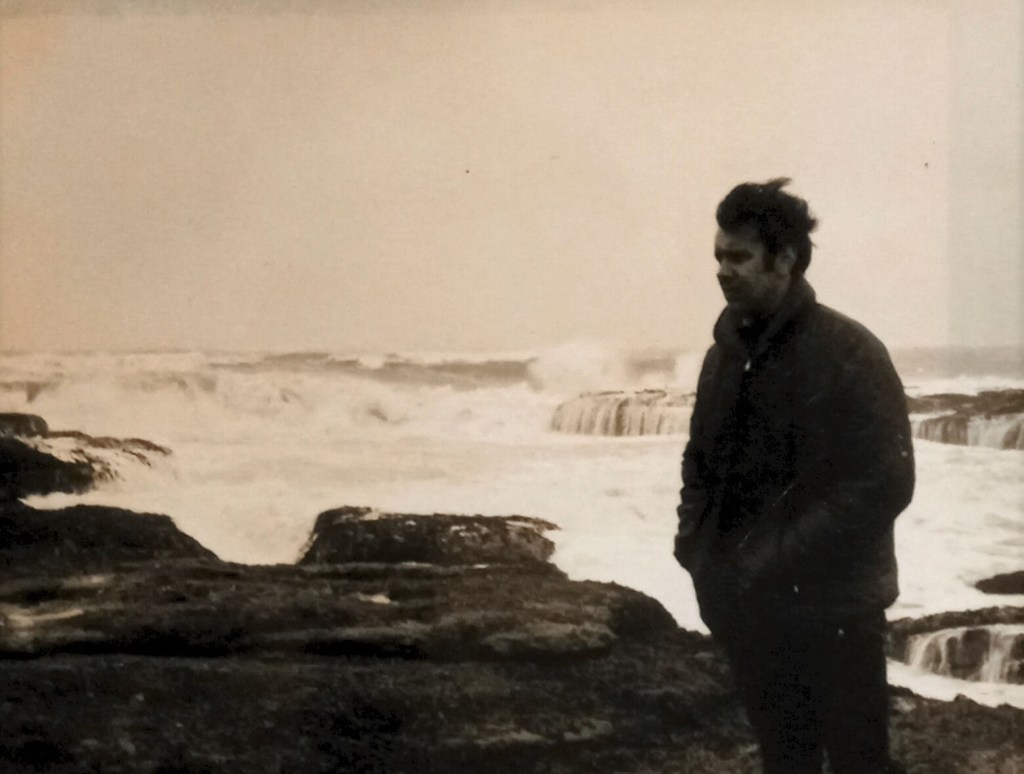
Copyright of the artist’s archive © 2026.
 Robert Cargill