Robert Cargill was born in Arbroath in 1940 into one of the oldest fishing families in the area. After leaving Arbroath High School, he worked as a compositor at the local newspaper, the Arbroath Herald. During this time he developed an interest in painting and took a studio just off the High Street, close to the Brothock Bridge. At the age of 23, he began a four year course at Duncan of Jordanstone College of Art where he studied under Alberto Morrocco and obtained a diploma in painting before doing a year’s postgraduate study.
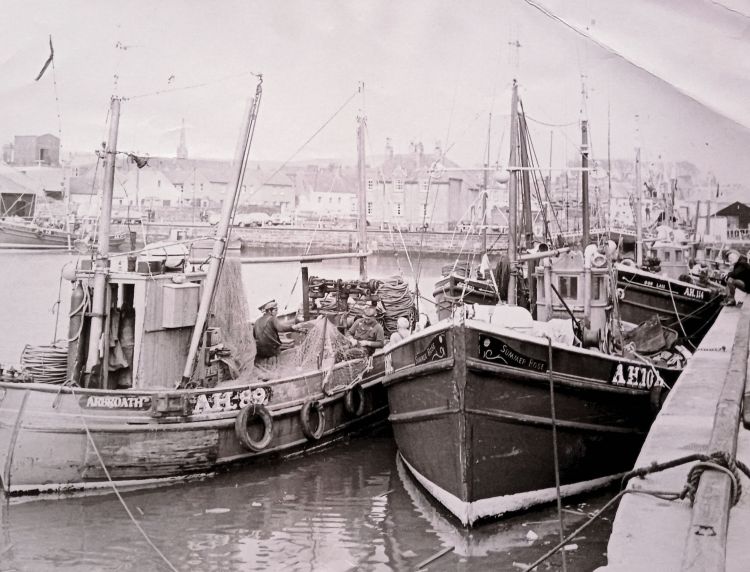
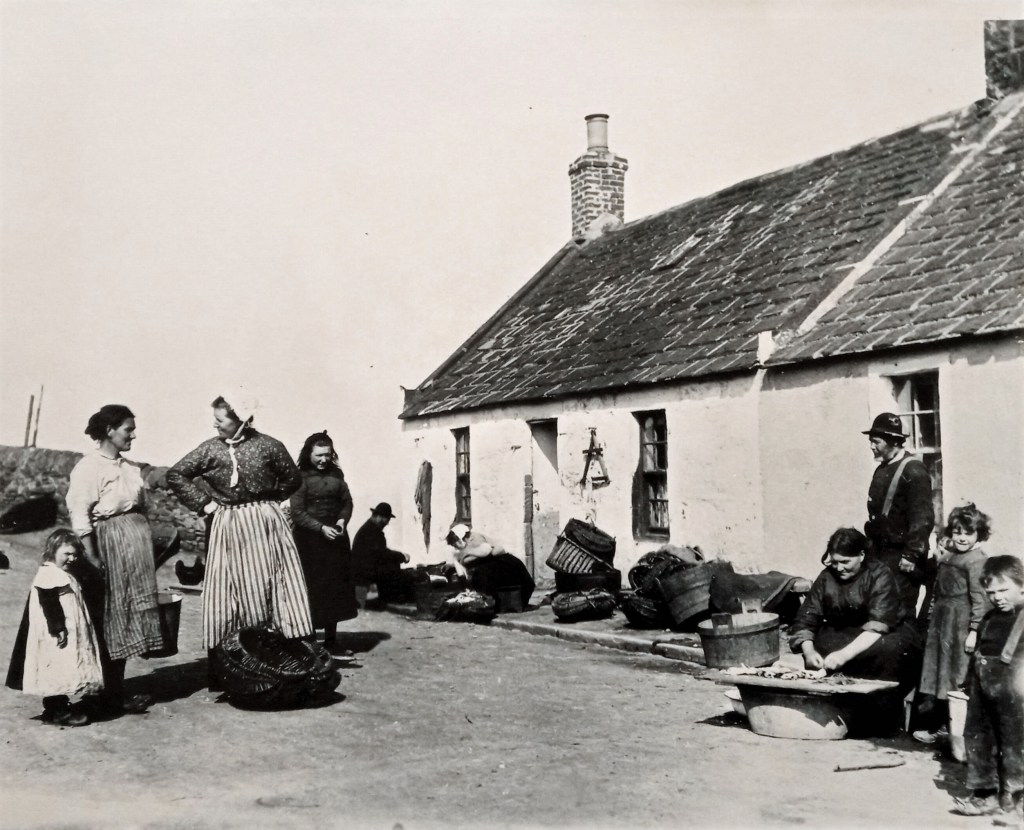
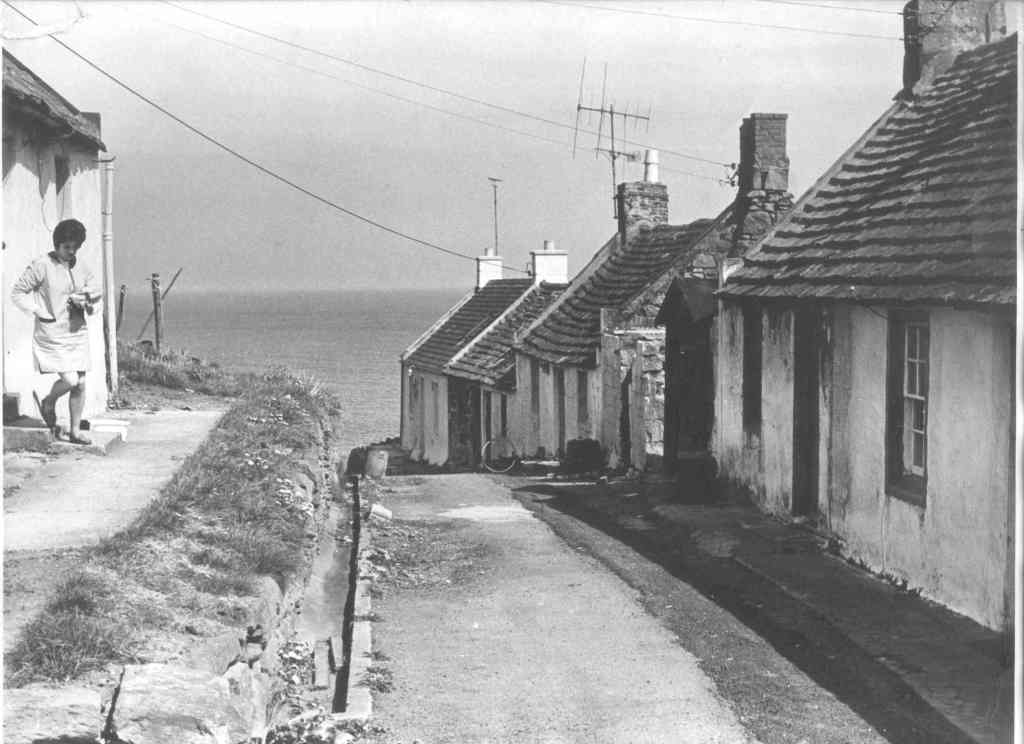
His fishing heritage and the coastline around Arbroath were what initially inspired him the most. He may have broken with the centuries old family tradition but he paid homage to that ancestry in his work. During the early years at art school, the artist exhibited in his parent’s fish shop at the foot of the West Port.
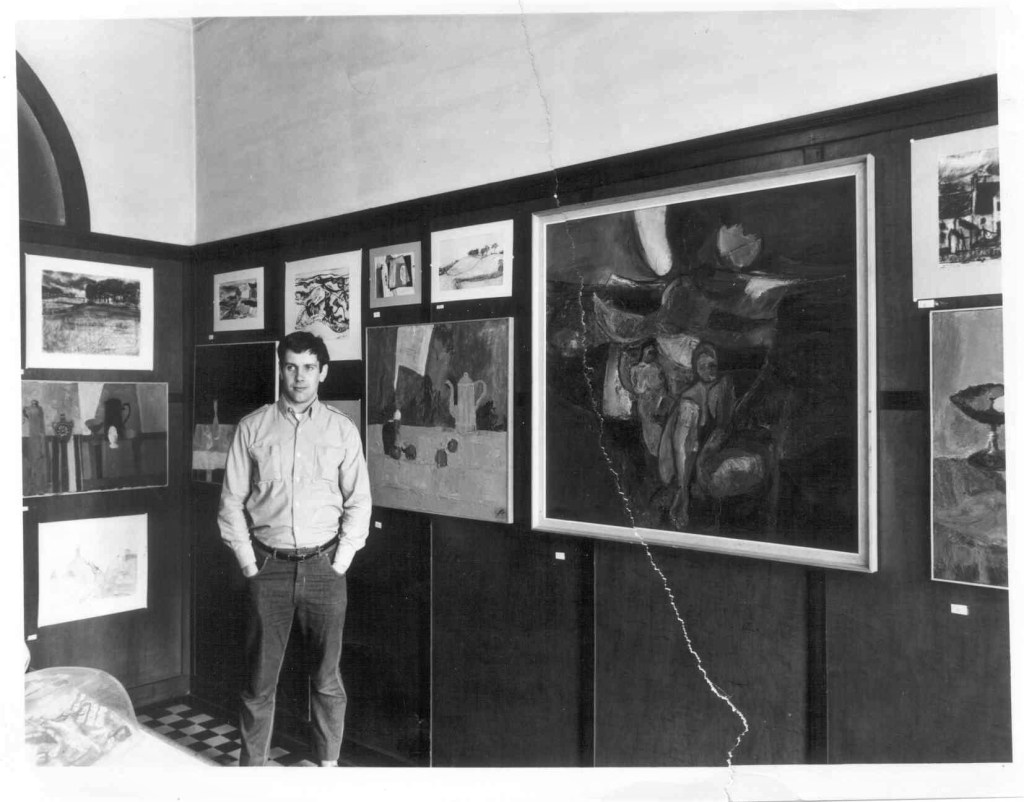
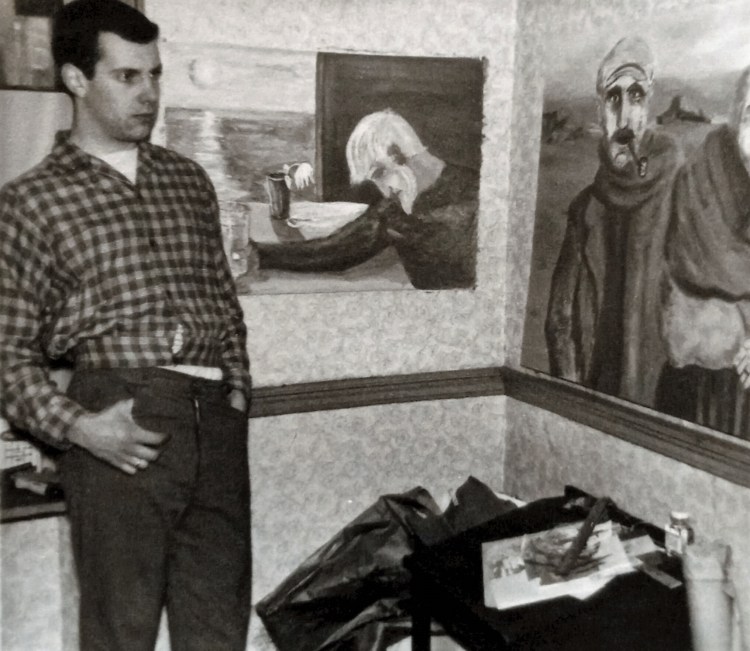
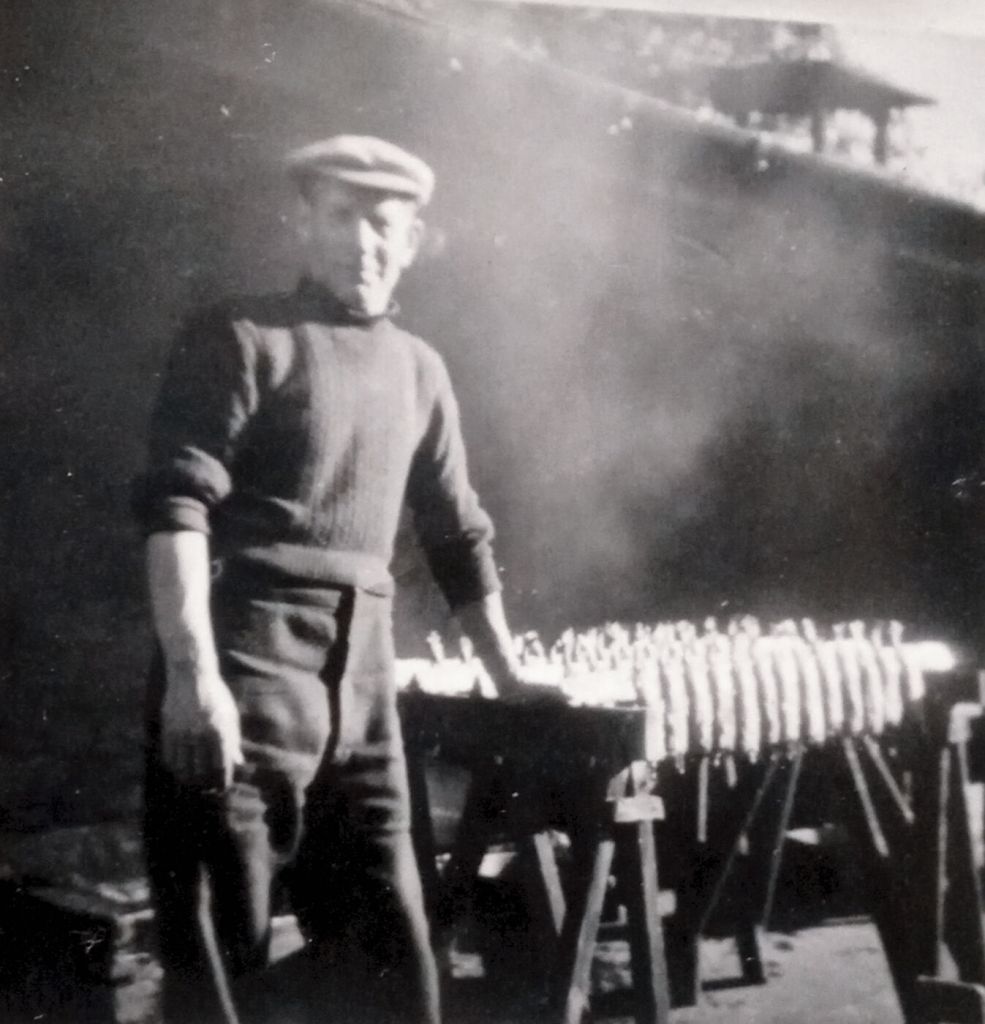
The artist in his early twenties exhibiting work in his parent’s fish shop and his father with Arbroath Smokies in the yard at the family home on the High Street.
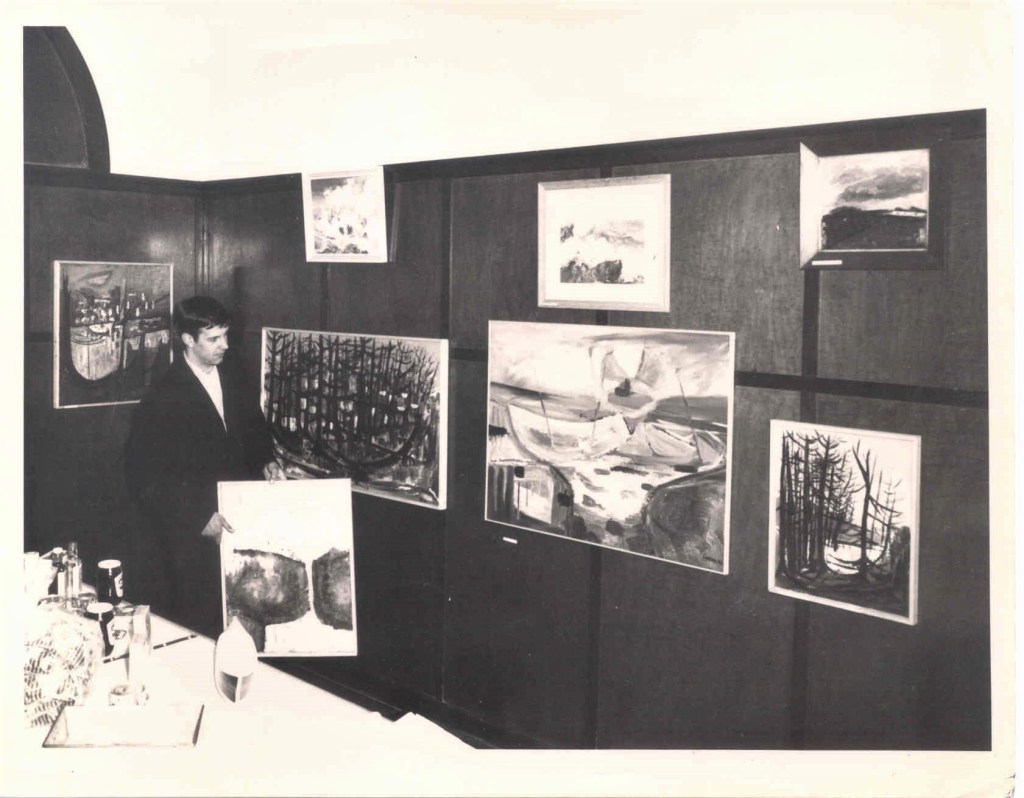
During the later years at Duncan of Jordanstone, the earlier work, including more representational land and seascapes, proved not enough for the artist. He gradually began relating human figures and landscape forms and advanced to taking simplified landscape images and breaking them up so as to give new insights.
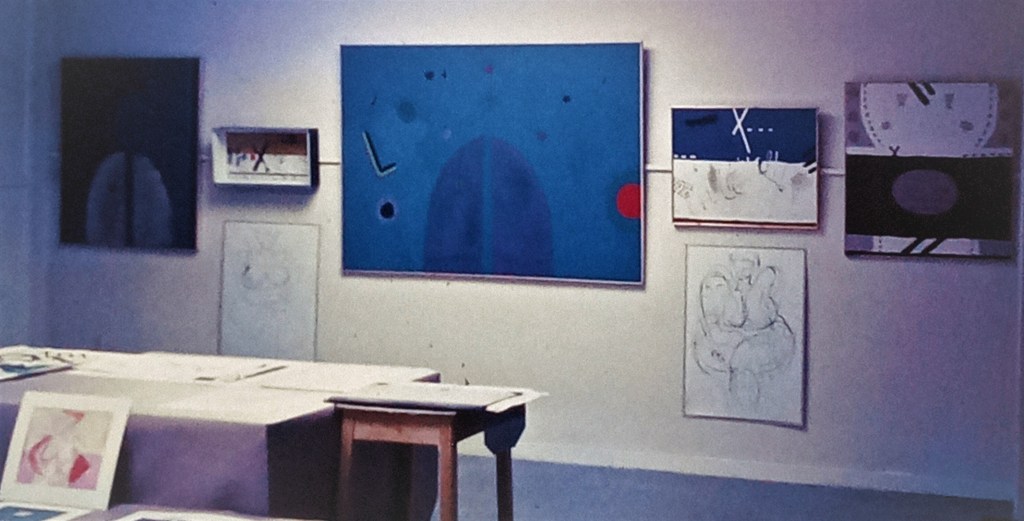
Details from the artist’s post graduate diploma show at Duncan of Jordanstone in 1968. The work is now in private collections and the collection of the art college.
https://artuk.org/discover/artworks/time-journey-91326
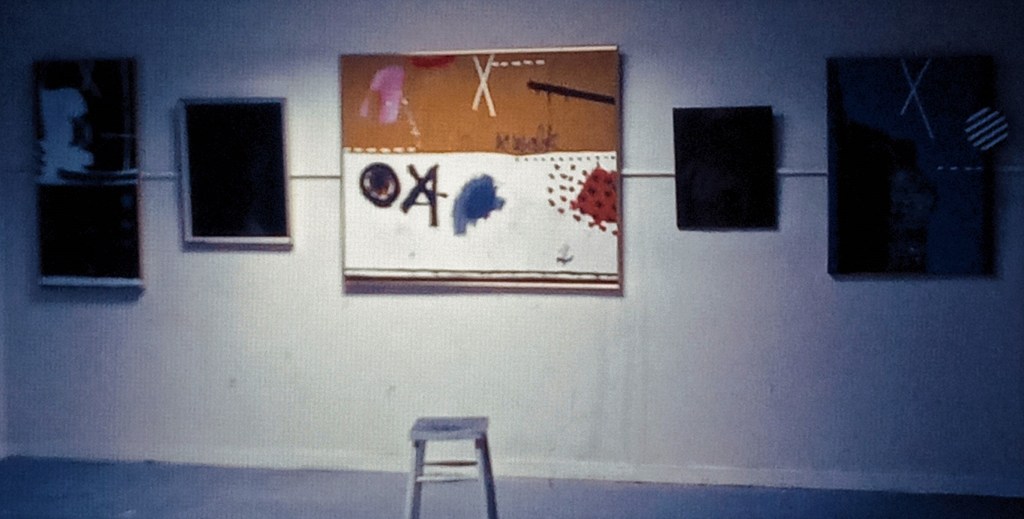
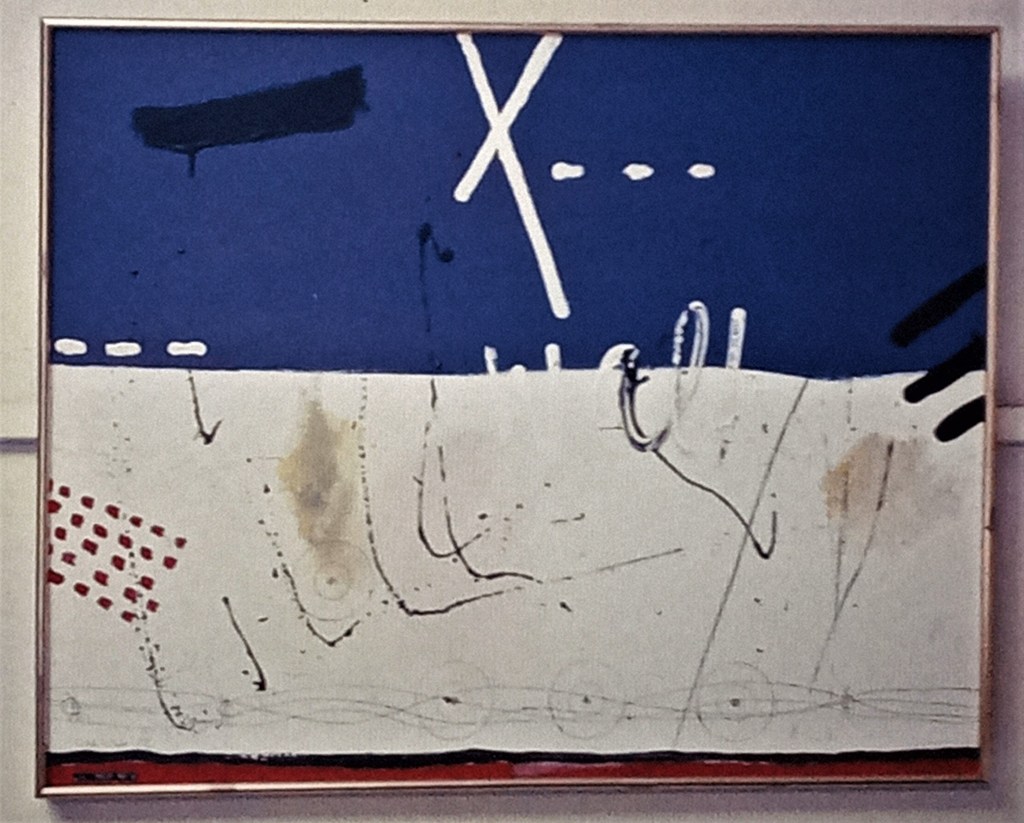
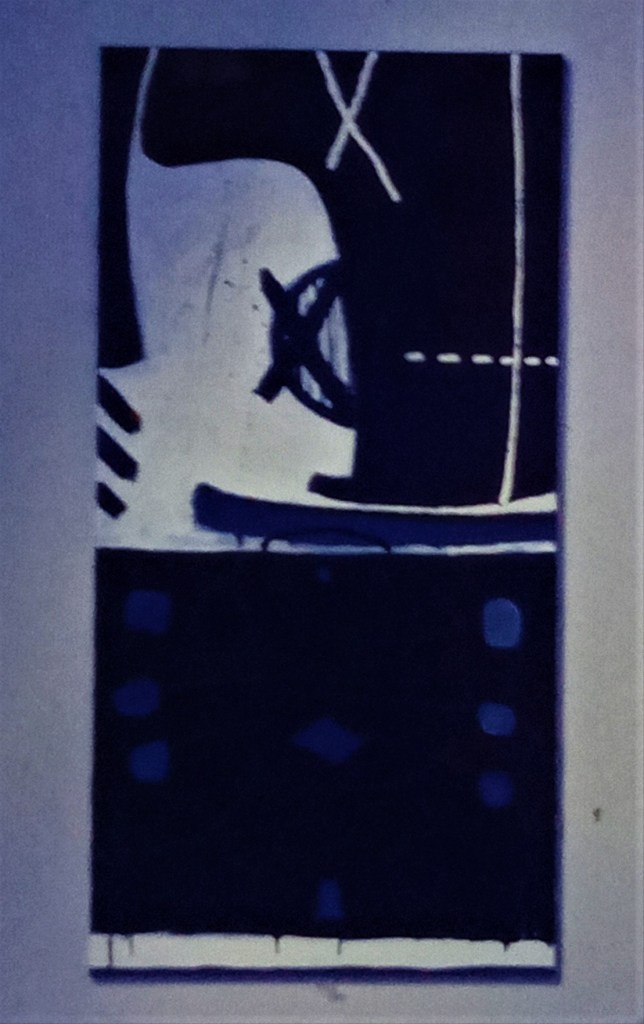
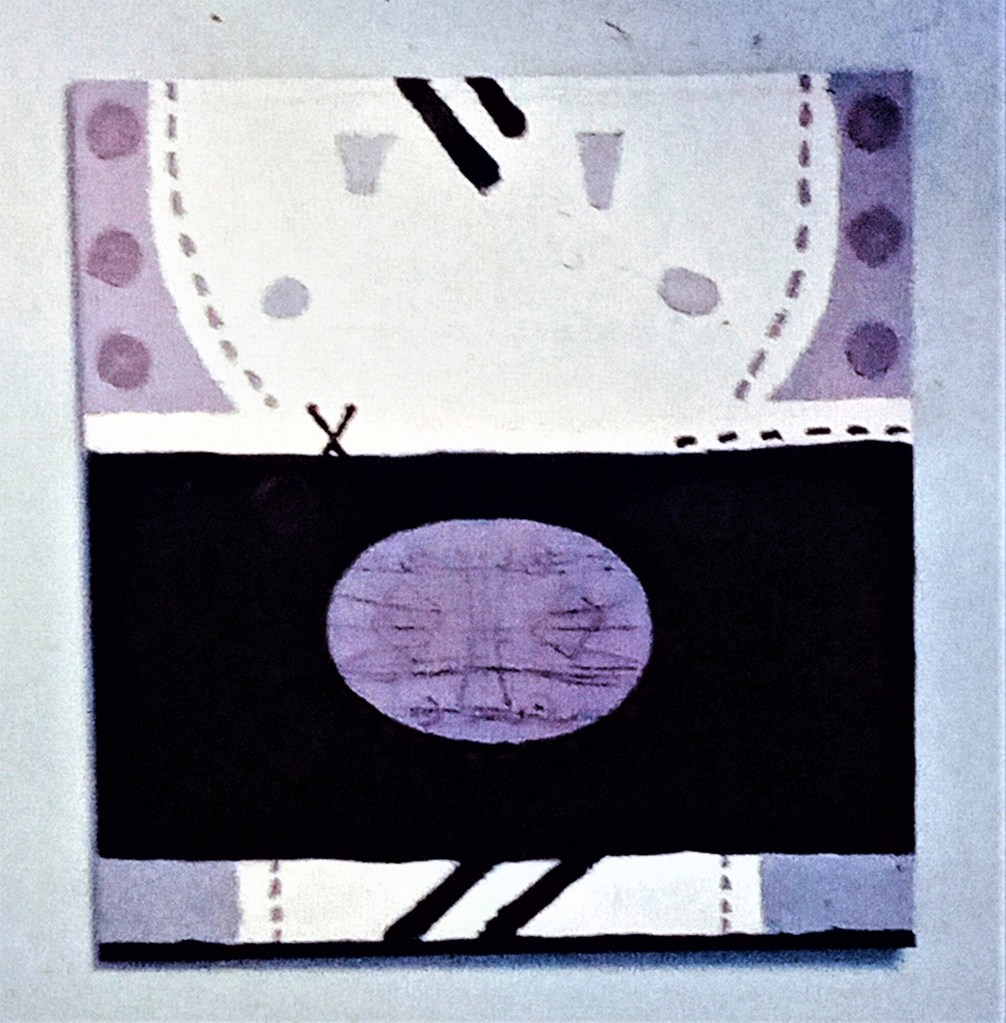
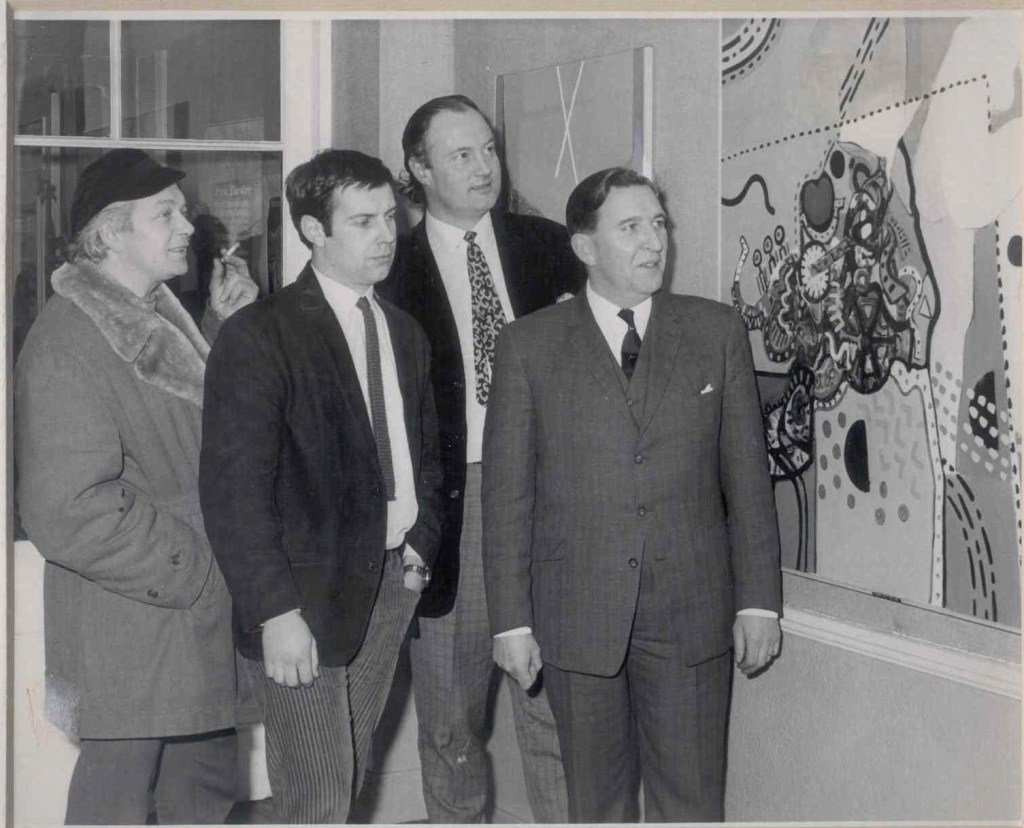
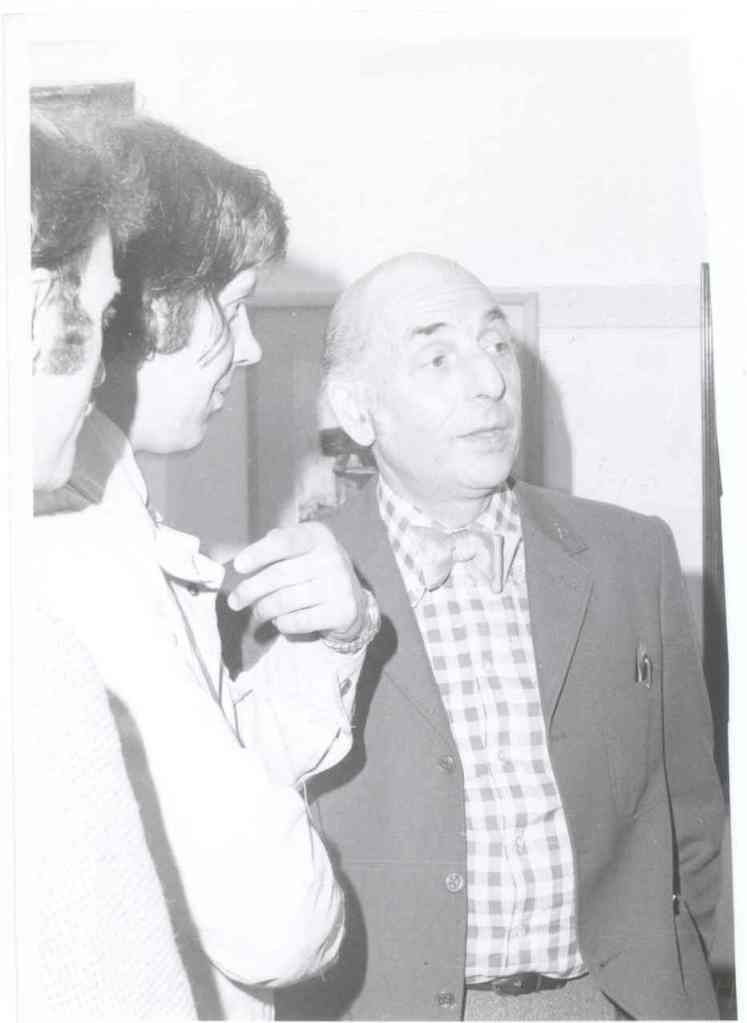
In 1967, the artist met gallery owner Richard Demarco in Edinburgh. The meeting was the start of a lifelong friendship. In 1968, he started to work on a long series of work he termed the Environment paintings. They were first shown in the New Tendencies in Scottish Art exhibition at the Demarco Gallery in 1969, and in the same year, at Aberdeen Arts Centre and Durham University.
‘He (Cargill) was anxious to be associated with a gallery… which reassured him that he would be presented along with other Scottish artists who like him were prepared to consider new experimental techniques in painting. He needed a gallery where his work could be placed in an international context.’
‘He chose not to follow the long and distinguished tradition of his family but to commit himself to painting with extraordinary energy. In so doing he took on a challenge which inspired a significant number of leading artists in Europe in the aftermath of the Second World War.
Sadly, many Scottish artists chose to ignore the achievements of those Italian, French and German artists who were involved in developing the aims of an important art movement known as ‘New Realism’. This movement was related to an influential group of Italian artists involved in making ‘arte povera’. They worked with poor or cast off materials and questioned the boundaries between sculpture and acceptable concepts of aesthetics. It was with these artists that Robert Cargill associated himself and his work.’
From obituary of the artist by Richard Demarco, the Scotsman, May 2001.
Copyright of the artist’s archive © 2026.
 Robert Cargill